

Company Profile
Shenzhen Perfect Precision Products Co., Ltd was established in 2012 with a registered capital of 1 million. It established a foreign trade team in 2014, passed the IS09001 quality system certification. It was awarded the title of Guangdong Contract and Trustworthy Enterprise in 2018, and passed the certification of high-tech enterprise and intellectual property management system in 2019. In 2020, the office area has been expanded to 5000 square meters, the total number of employees has reached 70, and the digital chemical plant has been realized in 2021.
Why Choose Us
Precision Machining
Customized high precision parts, Tolerance: +/-0.01 mm, Special area: +/-0.005 mm.
Our Certificate
ISO9001:2015,AS9100D,ISO13485:2016,ISO45001:2018,IATF16949:2016,ISO14001:2015,ROSH,CE etc.
Production Equipment
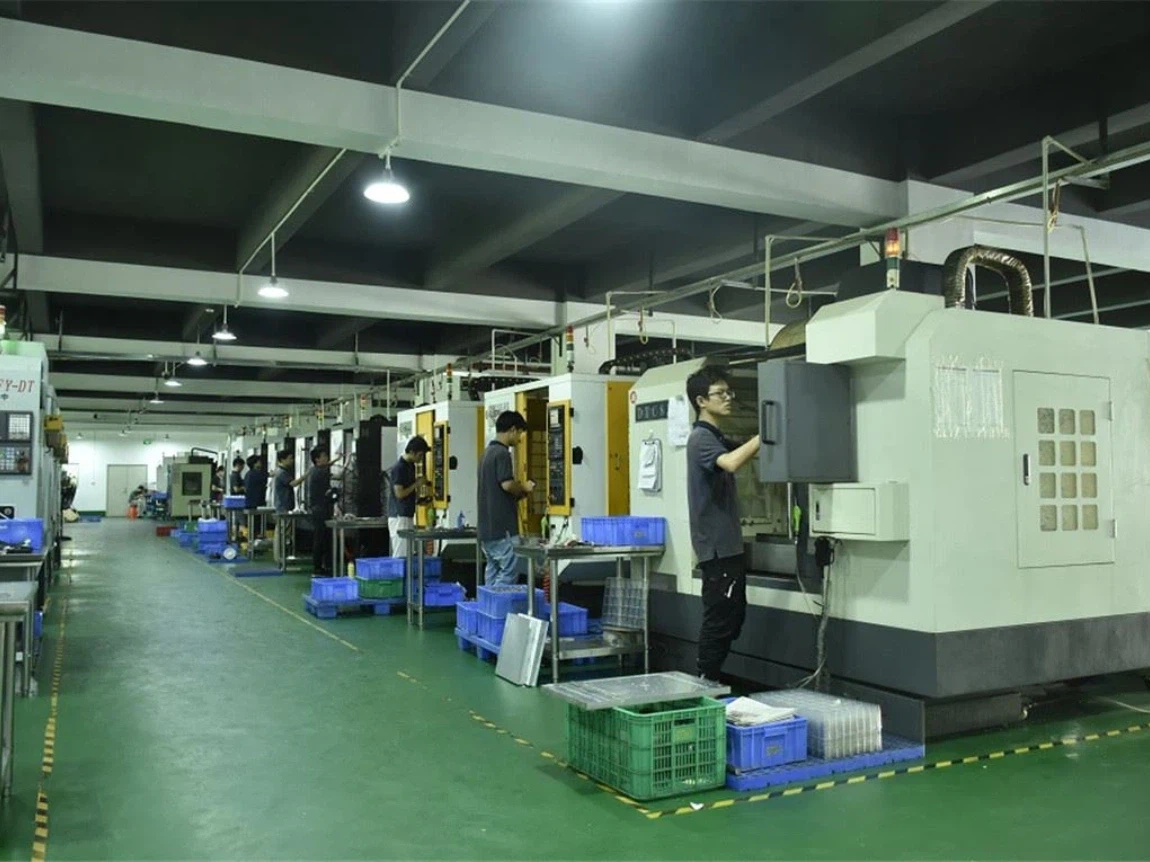
Our production equipment includes: 3-axis, 4-axis, 5-axis, 6-axis. Our processing range includes turning, milling, drilling, grinding, EDM and other processing methods.There are about 50-60 machines, most of which are imported from the United States and Japan, such as HAAS VF-2SS (5 axis) in the United States and TSUGAMI B0206 (6 axis) in Japan.
Our Service
OEM/ODM
1-Piece minimum order
3-H quotation
Samples: 1-3 Days
Lead time: 7-14 Days
-

CNC Milling Machining
Your Partner in Precision. Our Machining Services Deliver Unbeatable Accuracy and Consistency, Add to Inquiry -
CNC Turning Machining
Elevate Precision with Customized CNC Turning Machining ServicesTitanium Alloy Parts. . Precision Add to Inquiry -
Flanged Polished Brass Threaded Connector Bushing For Hyd...
This type of brass threaded bushing is commonly used in hydraulic and pneumatic systems. Brass is Add to Inquiry -
Rounded End Brushed Brass Precision Enclosure For Electro...
I have a deep impression of this brass chamber, which is designed for a high-end sensor customer Add to Inquiry -
Multi-step Black Anodized Aluminum Optical Lens Barrel Fo...
The precision requirements for optical lenses are really high, especially for the lens barrel, Add to Inquiry -
Custom CNC Machined Aluminum Mounting Block For Automatio...
The installation base may seem simple, but it actually requires high precision - it is the Add to Inquiry -
High Precision Black Aluminum Elastic Coupling Sleeve For...
I have been working in CNC machining at Shenzhen PFT for nearly twelve years, and this elastic Add to Inquiry -
CNC Aluminum Parts Customization Solution
Precision Machining Parts. . Machinery Axis: 3,4,5,6. Tolerance:+/- 0.01mm . Special Areas : Add to Inquiry -
Precision CNC Machined Aluminum Components
Precision Machining Parts. . Machinery Axis: 3,4,5,6. Tolerance:+/- 0.01mm . Special Areas : Add to Inquiry -
Precision CNC Aluminum With Black Hard Coat
Precision Machining Parts. . Machinery Axis: 3,4,5,6. Tolerance:+/- 0.01mm . Special Areas : Add to Inquiry -
Precision CNC Turned Brass Parts
Precision Machining Parts. . Machinery Axis: 3,4,5,6. Tolerance:+/- 0.01mm . Special Areas : Add to Inquiry -
High-Precision Helical Gear Set, Metal Spur Gear Assembly...
Precision Machining Parts. . Machinery Axis: 3,4,5,6. Tolerance:+/- 0.01mm . Special Areas : Add to Inquiry


What is CNC Machining
CNC machining has become an integral part of various industries, as it offers precision, efficiency, and versatility when it comes to manufacturing custom parts and components. This manufacturing process has evolved from the numerical control (NC) machining process, which used punched tape cards to control machinery. CNC stands for Computer Numerical Control and refers to the automated control of machining tools, such as drills, lathes, mills, grinders, routers, and 3D printers, using a computer.

Benefits of CNC Machining
Zero defects and greater accuracy
Since precision turning machines operate autonomously and without any manual intervention, they bypass the possibility of human errors seeping into the manufacturing process, leading to defects. With codes and software programs governing the end-to-end process, the machines can deliver greater accuracy without any flaws.
Faster and efficient production
When working with milling machines, one can operate these on their fastest settings to match increased demands. Plus, as stated earlier, these machines can run 24 hours a day and seven days a week without tiring, without breaks, and without any trade-offs.
Reduction in energy consumption
Industries such as oil and natural gas, petrochemicals, aerospace, automotive, etc., are already known to be energy-intensive due to the losses involved. However, the introduction of CNC machines can allow them to remain scalable and precise without usurping limited resources such as energy and labor any further than what is necessary.
CNC machining leads to lower production costs
With the above advantages in mind, it is only intuitive to glean that the use of CNC machines for the precision turning of components can massively bring down the cost of production. For a start, it improves the efficiency and scalability of production and assembly without contributing to material waste.similarly, it reduces energy consumption and saves these recurring operational costs. At the same time, it also offloads any financial liability triggered by accidents and incidents.
Type of CNC Machining

01
Lathes
CNC lathes are machines that rotate a workpiece around a stationary cutting tool, enabling precise and efficient shaping of the material. They are primarily used for turning operations and can accommodate a range of materials, including metal, plastic, and wood. The CNC Lathe Machine manages and transfers material programmatically to the computer, allowing for a high degree of precision and customization.

02
Grinders
CNC grinders use a rotating abrasive wheel to shape and finish workpieces through accurate, high-precision grinding. These machines are particularly well-suited for creating precision components with tight tolerances, such as cutting tools, automotive parts, and aerospace components. With various types of grinders available, manufacturers can select the ideal machine for specific grinding applications.

03
Plasma Cutters
CNC plasma cutters use a high-velocity jet of ionized gas to cut through electrically conductive materials. These machines provide accurate, efficient cutting, especially for thick materials like steel or aluminum. Plasma cutters are often used in industrial settings, like shipbuilding and manufacturing, due to their ability to produce large, intricate shapes with minimal waste.

04
Laser Cutters
Laser cutters use a focused laser beam to slice through materials with precision and accuracy. They are ideal for cutting thin materials such as sheet metal, plastic, or wood, and can produce intricate shapes with minimal kerf (the width of the cut). CNC laser cutters are used in various industries, from electronics to automotive manufacturing, thanks to their ability to produce highly detailed designs.
What are the Materials Used in CNC Machining
Metal
Meal is easily the most commonly used material in CNC machining. CNC machines can cut almost any type of metal from free-machining brass to nickel superalloys like Inconel. Metal machining covers a range of applications from injection molds to shafts and gears.
Plastic
While the vast majority of plastic parts are manufactured using injection molding, CNC machining may be used to produce certain plastic components. Typical materials can include ABS (acrylonitrile butadiene styrene), nylon, and polycarbonate. Plastic machining applications can include valve bodies, bushings, and injection molding prototypes to check the overall function of the part before investing in expensive molding tools.
Wood
CNC routers are most often used to cut wood and are generally cheaper than standard metal cutting CNC machines. CNC machining of wood is most commonly done for decorative purposes. Common applications include furniture, window frames, and ornamental panels.
Foam
Polyurethane foam (either closed or open-cell) is commonly used in CNC machining applications. Foam blocks can be cut into snug packaging for high-value products using a CNC router. One example is the foam used in toolboxes to keep the tools secure during transport.
Composites
CNC machines are regularly used when processing composite parts. Composites can include anything from aramid to fiberglass to carbon fiber. These materials are extremely abrasive to cutting tools. Aerospace and marine composite components are machined to add fastener holes and for general trimming after the molding process.
Application of CNC Machining
Woodworking Industries
Wooden furniture is often CNC machined to save time and reduce cost. Manually carving wooden parts is extremely time-consuming and costly. CNC machines can be used to create furniture with complex geometries that would have otherwise required a master woodworker to achieve.
Lettering and Engraving Systems
Some applications don’t require the heavy-duty removal of material, but rather make use of an engraving tool to mark patterns or text onto the surface of a part. This application can be done for artistic applications or serialized parts.
Electrical Industry
Demand for CNC-machined parts for the electronics industry covers a wide spectrum of applications. Machining component mounting holes into printed circuit boards and machining aluminum or copper heat sink for heat-generating electrical components are some examples of the use of CNC machining in the electronics industry. Get started on a new Small Batch CNC Machining Quote.
Pharmaceutical Industry
CNC machines are used to manufacture precise equipment for use in the production of pharmaceutical products. Applications can include extremely precise metering pumps, ingredient-dispensing nozzles, and packaging. Get started on a new Production CNC Machining Quote.
Food and Beverage Industry
The fast-moving consumer goods industry makes use of a wide range of custom material-handling machinery that makes use of CNC machined parts. Food packaging is also made from injection molded plastics whose molds are CNC machined.
What is the CNC Machining Process
Designing the CAD Model
A CAD (Computer Aided Design) 3D model is developed by an engineer or designer. This part is designed according to specific CNC design principles, which are included in the overall DFM (Design for Manufacturing) philosophy. DFM ensures that the part can be efficiently manufactured on a CNC machine. For CNC parts, it is not strictly necessary to create 2D drawings of the part, since the machine instructions are created using CAM software which generates machine instructions. However, 2D drawings are often generated to indicate key dimensions for quality control purposes.
Converting the CAD File to a CNC Program
The CAD file is exported to a CAM (Computer Aided Manufacturing) software package that contains a range of tools to convert the 3D model into a set of instructions that can be understood by the CNC machine. CAM software is normally used by CNC machine operators to generate G-code. At the end of the process, a G-code file is saved to the machine. This file contains all the relevant instructions required to manufacture the part.
Preparing the CNC Machine
Preparing the machine to fabricate a new part number starts with setting up the required fixturing to hold the raw stock material in place while the cutting tool removes material. Alternatively, the raw stock is fixed in a spindle and stationary cutting tools are presented to the rotating stock piece to remove material. The required tooling must be checked for wear or chips and placed into the machine. More advanced CNC machines have automatic tool changers and tool libraries that allow the machine to automatically select the relevant tool needed to machine a specific feature without having to wait for the operator to swap out tools.
Executing the Machining Operation
When the material is securely clamped into the machine, the correct tooling is selected and the G-code is loaded, the actual machining can commence. Once the cycle-start button is pressed the machine will select the appropriate tool, move to the workpiece and begin removing material as per the G-code instructions and will continue until the part is complete. For operations that require machining with more than one type of tool, or with the part in more than one orientation, some CNC machines may require the operator to reposition the in-process work material between operations.
Components of CNC CNC Machining
Central Processing Unit (CPU)
A CNC system is controlled in the CPU or the heart of the system. It is where the information stored in the memory as part program is received. After the data is accepted, the CPU decodes and changes this data into specific position control and velocity control signals. It also oversees the movement of the spindle or control axis to avoid actions that do not match with the programmed data or correct these actions if already taken.
Input devices
Input devices are the devices used for putting in the part program in the CNC control. There are three input devices that are commonly used, which are the magnetic tape reader, punch tape reader, and computer via RS-232-C communication.
Machine Control Panel
A machine Control Panel is a flat area where controlling, monitoring, or managing instruments are displayed, serving as the direct interface between the operator and the NC system. Before a program is executed, the machine should be prepared in terms of loading the system memory with the required part program, establishing a correct reference point, and other necessary command. After the preparation, the CNC then controls the axis of the motion, spindle function or tool function on the machine, following the part program stored in the memory.
Machine Tool
There are different types of machine tools a CNC controls but what they all have in common is a slide table and a spindle to control the position and speed.
Programmable Logic Controller (PLC)
A PLC is an industrial solid-state computer that matches the NC to the machine, which follows a pre-programmed sets of rules and carry out outputs based on inputs to control system and make logic-based decisions for the CNC machine. It is used to minimize manual operation and can survive harsh conditions such as extreme heat, cold, dust, and moisture.
Servo Control Unit
The servo control unit is responsible for precise position control as it receives the position feedback signals for the actual movement of the machine tool axes from the feedback devices. It generates suitable signals as command values, which are interfaced with the axes and the spindle motors.
Feedback Devices
The feedback devices, which is also referred to as the measuring system, consist of position and speed transducers that act as sensors to monitor the current position of the cutting tool at any instant.
Display Unit
The display unit is a monitor or an interactive device between the machine and the operator which displays the present status of the programs, commands, and other necessary data of the CNC machine. It can also be useful for maintenance and installation work because it can display other important information such as machine parameters, logic diagram of the program controller, error messages, and diagnostic data.
How to Maintain CNC Machining


Precision is the heartbeat of CNC machining, capable of achieving hair-thin accuracy (within 0.0001 inches). The key to unlocking this precision lies in a practice that is both essential and deceptively Simple: Maintenance. In the realm of CNC machining, where precision is paramount and errors come with a high price tag, understanding the core maintenance tasks is not just practical but imperative.
Coolant Management: CNC machining rely on proper coolant levels and concentration to dissipate the heat generated by swift tool movements, ensuring the integrity of workpieces and tools.
Efficient Cooling: Spindles racing at speeds over 10,000 RPM demand efficient cooling to fend off thermal challenges. Temperature sensors stand guard, providing alerts for temperature variations.
Lubrication: Like a well-choreographed ballet, CNC machining necessitate precise lubrication to maintain the seamless motion of intricate parts, preventing premature wear.
Fluid Oversight: Beyond lubrication, careful monitoring of hydraulic and other fluid levels is essential. Unusual fluid consumption might hint at underlying issues.
Surface Hygiene: In a universe where precision rules, even surfaces matter. Regularly wiping down surfaces—windows, doors, lights, handles—ensures clarity, grip, and a spotless work environment.
Our Factory
Shenzhen Perfect Precision Products Co., Ltd is a precision engineering manufacturer based in South China Shenzhen, specializing in the supply of high quality machined components in a variety of materials, utilizing the latest CNC turning, CNC milling, Multi-Spindle machining, sheet metal fabrication, injection molding, laser cutting, and stamping technology.


FAQ
We're professional cnc machining manufacturers and suppliers in China, specialized in providing high quality customized products. We warmly welcome you to buy cnc machining for sale here from our factory. For quotation, contact us now.
medical equipment spare parts, stamping die components, aluminum road bike wheels