

Company Profile
Shenzhen Perfect Precision Products Co., Ltd was established in 2012 with a registered capital of 1 million. It established a foreign trade team in 2014, passed the IS09001 quality system certification. It was awarded the title of Guangdong Contract and Trustworthy Enterprise in 2018, and passed the certification of high-tech enterprise and intellectual property management system in 2019. In 2020, the office area has been expanded to 5000 square meters, the total number of employees has reached 70, and the digital chemical plant has been realized in 2021.
Why Choose Us
Our Factory
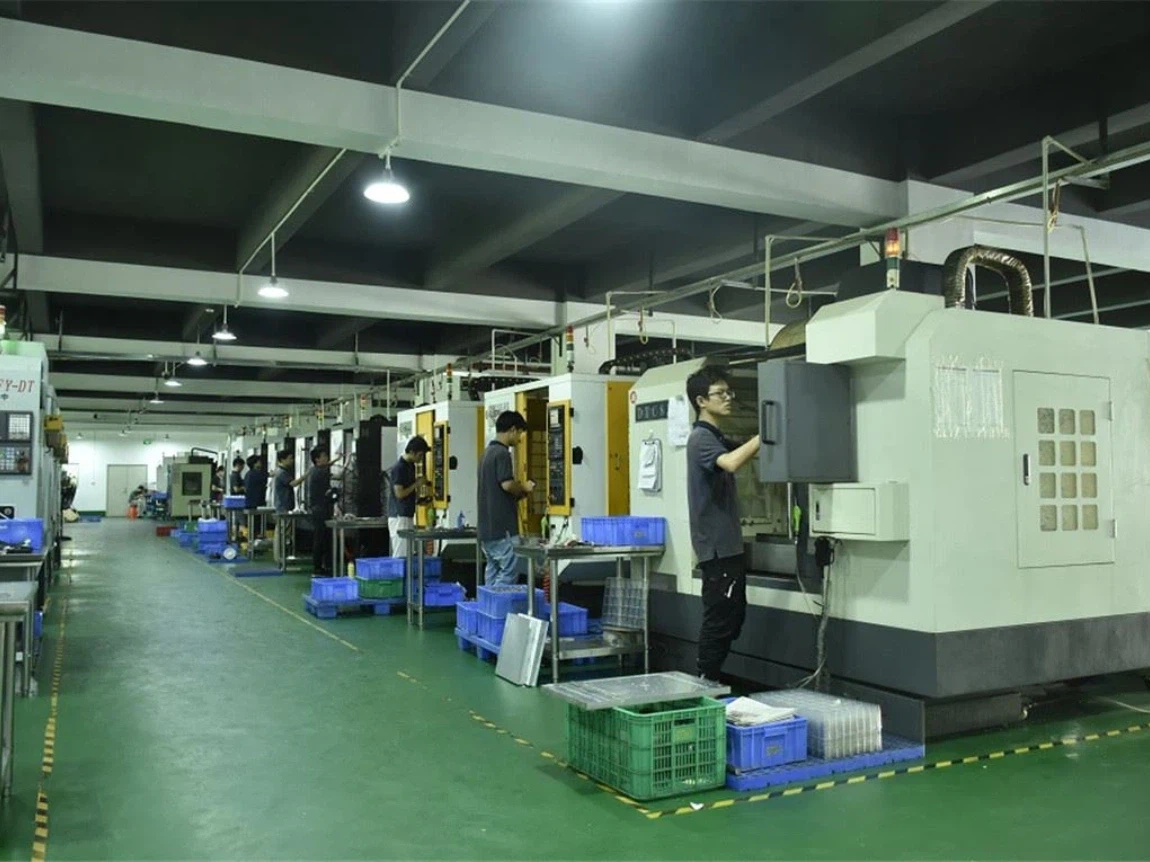
Shenzhen Perfect Precision Products Co., Ltd is a precision engineering manufacturer based in South China Shenzhen, specializing in the supply of high quality machined components in a variety of materials, utilizing the latest CNC turning, CNC milling, Multi-Spindle machining, sheet metal fabrication, injection molding, laser cutting, and stamping technology.
Our Certificate
ISO9001:2015,AS9100D,ISO13485:2016,ISO45001:2018,IATF16949:2016,ISO14001:2015,ROSH,CE etc.
Production Equipment
There are about 50-60 machines, most of which are imported from the United States and Japan, such as HAAS VF-2SS (5 axis) in the United States and TSUGAMI B0206 (6 axis) in Japan.
Our Service
Pre sales service: Customer sends drawings or expresses samples, informs salesman the required materials, surface treatment and order quantity. We can provide quote within 3 hours, 7 days for prototypes, support for OEM/ODM.
-

Machined Worm Shaft With Helical Profile And Splined Driv...
Precision Machining Parts. . Machinery Axis: 3,4,5,6. Tolerance:+/- 0.01mm . Special Areas : +/-0.005mm . Surface Roughness: Ra 0.1~3.2 . Supply Ability:500000Piece/Month. 1-Piece Minimum Order . Add to Inquiry -
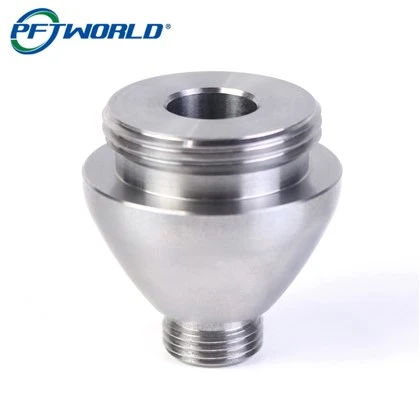
Custom 316 Stainless Steel Precision Connector Machined Part
Precision Machining Parts. . Machinery Axis: 3,4,5,6. Tolerance:+/- 0.01mm . Special Areas : +/-0.005mm . Surface Roughness: Ra 0.1~3.2 . Supply Ability:500000Piece/Month. 1-Piece Minimum Order . Add to Inquiry -
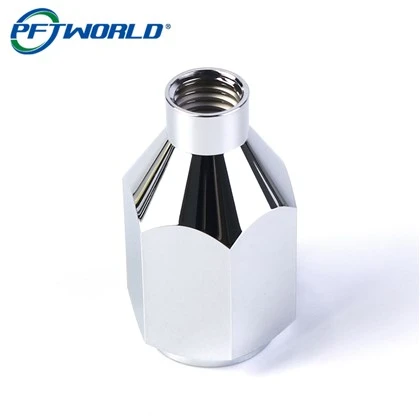
High-precision Brass Antenna Sleeve Customized CNC Proces...
Precision Machining Parts. . Machinery Axis: 3,4,5,6. Tolerance:+/- 0.01mm . Special Areas : +/-0.005mm . Surface Roughness: Ra 0.1~3.2 . Supply Ability:500000Piece/Month. 1-Piece Minimum Order . Add to Inquiry -
Stainless Steel Gear Parts Precision Manufacturing High A...
Precision Machining Parts. . Machinery Axis: 3,4,5,6. Tolerance:+/- 0.01mm . Special Areas : +/-0.005mm . Surface Roughness: Ra 0.1~3.2 . Supply Ability:500000Piece/Month. 1-Piece Minimum Order . Add to Inquiry -
High Precision Brass Gears Custom CNC Reliable Performance
Precision Machining Parts. . Machinery Axis: 3,4,5,6. Tolerance:+/- 0.01mm . Special Areas : +/-0.005mm . Surface Roughness: Ra 0.1~3.2 . Supply Ability:500000Piece/Month. 1-Piece Minimum Order . Add to Inquiry -
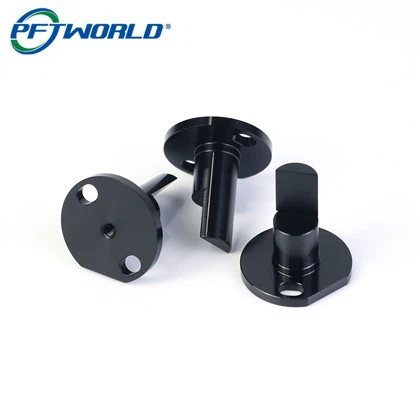
High-precision CNC Machining Of Aluminum Parts - Black Ox...
Precision Machining Parts. . Machinery Axis: 3,4,5,6. Tolerance:+/- 0.01mm . Special Areas : +/-0.005mm . Surface Roughness: Ra 0.1~3.2 . Supply Ability:500000Piece/Month. 1-Piece Minimum Order . Add to Inquiry -
Custom CNC Precision Turning 6061-T6 Aluminum Parts – Bri...
Precision Machining Parts. . Machinery Axis: 3,4,5,6. Tolerance:+/- 0.01mm . Special Areas : +/-0.005mm . Surface Roughness: Ra 0.1~3.2 . Supply Ability:500000Piece/Month. 1-Piece Minimum Order . Add to Inquiry -
Precision CNC Machined Aluminum Components
Precision Machining Parts. . Machinery Axis: 3,4,5,6. Tolerance:+/- 0.01mm . Special Areas : +/-0.005mm . Surface Roughness: Ra 0.1~3.2 . Supply Ability:500000Piece/Month. 1-Piece Minimum Order . Add to Inquiry -
Customized CNC Parts Precision Black Plastic
Precision Machining Parts. . Machinery Axis: 3,4,5,6. Tolerance:+/- 0.01mm . Special Areas : +/-0.005mm . Surface Roughness: Ra 0.1~3.2 . Supply Ability:500000Piece/Month. 1-Piece Minimum Order . Add to Inquiry -
Precision CNC Machining Of Bronze Parts
Precision Machining Parts. . Machinery Axis: 3,4,5,6. Tolerance:+/- 0.01mm . Special Areas : +/-0.005mm . Surface Roughness: Ra 0.1~3.2 . Supply Ability:500000Piece/Month. 1-Piece Minimum Order . Add to Inquiry -
High-precision CNC Aluminum Processing Solution
Precision Machining Parts. . Machinery Axis: 3,4,5,6. Tolerance:+/- 0.01mm . Special Areas : +/-0.005mm . Surface Roughness: Ra 0.1~3.2 . Supply Ability:500000Piece/Month. 1-Piece Minimum Order . Add to Inquiry -
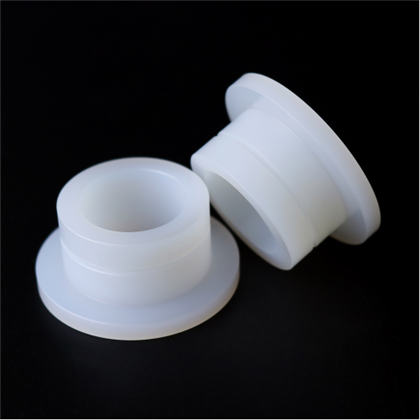
CNC Machining Nylon PA6 Bushings
Precision Machining Parts. . Machinery Axis: 3,4,5,6. Tolerance:+/- 0.01mm . Special Areas : +/-0.005mm . Surface Roughness: Ra 0.1~3.2 . Supply Ability:500000Piece/Month. 1-Piece Minimum Order . Add to Inquiry





What is CNC Turning
CNC Turning is a manufacturing process in which bars of material are held in a chuck and rotated while a tool is fed to the piece to remove material to create the desired shape. A turret (shown center), with tooling attached is programmed to move to the bar of raw material and remove material to create the programmed result. This is also called “subtraction machining” since it involves material removal. If the center has both tuning and milling capabilities, such as the one above, the rotation can be stopped to allow for milling out of other shapes.

Benefits of CNC Turning


Accuracy
The CNC turning machine can execute exact measurements and eliminate human mistakes using CAD or CAM files. Experts can deliver incredibly high accuracy using cutting-edge machinery, whether for the production of prototypes or the completion of the entire production cycle. Every cut is precise since the machine being used is programmed. In other words, the final piece in the production run is identical to the first piece.
Flexibility
Turning centers come in various sizes to accommodate your applications’ flexibility. The adjustment is rather easy because this machine’s tasks are preprogrammed. The operator can finish your component by making the necessary programming adjustments to your CAM program or even build something entirely different. Therefore, you can rely on the same precision CNC machining services company if you need many unique parts.
Safety
Manufacturing firms adhere to strict safety rules and regulations to guarantee complete safety. Since the turning machine is automatic, less labor is required because the operator is only there to monitor the machine. Likewise, the lathe body employs fully enclosed or semi-enclosed protective devices to avoid flying particles from the processed item and lessen harm to the crew.
Faster Results
There is a lower chance of error when tasks specified by programming are carried out on CNC lathes or turning centers. As a result, this machine can finish production more quickly without sacrificing the final output quality. Finally, you can receive the necessary components faster than with other options.
Working Principles of CNC Turning
CNC lathe turning follows a systematic approach to aching high-precision manufacturing like other machining operations. First, you must convert your CAD files into codes recognizable to the CNC device. Afterward, you can set up the machine and ready it for turning.
After setting up the machine, the first thing to do is clamp the workpiece to the device. Then, turning can begin, which involves rotating and spinning the material (workpiece). Ensure the correct input and configuration of the computer codes, which act as a guide, controlling the movement of the cutting tools in the tool turret or tool post as they engage the workpiece.
Then, the cutters chip off pieces of the material till the desired shape, usually cylindrical, conical, or round, is programmed. Once it reaches the desired shape, size, and tolerance specifications, the CNC turned parts are finished. However, you can proceed to secondary operations and finishes to enhance its aesthetics and overall properties.
The major types of material for CNC turning
Aluminum 6061
Aluminum 6061 is one of the most common metals suitable for general-purpose CNC machining. The major alloying components of aluminum 6061 are silicon, magnesium, and iron. It has a good strength-to-weight ratio, resistant to corrosion, and has good CNC machinability.
Brass
Brass is another metal material type that is suitable for CNC turning. It is an alloy of zinc and copper. The softness of the material enables it to be used on the machine without any form of lubrication before use.
Stainless Steel 304
Generally, stainless steel is a good metal material suitable for CNC turning. We have different types. Stainless steel 304, is found in different variety of industrial and consumer products. It contains an extra 8% nickel and 18% chromium in the alloy. The additional elements make it non-magnetic and tough.
Titanium
Titanium is known for its toughness, high strength, corrosion resistance, and lightweightness. Titanium is a good conductor of heat but a poor conductor of electricity. The material can be passivated, welded, and anodized for increased protection.
ABS
ABS is a plastic CNC turning material that is good for different projects. It is tough, chemical-resistant, electrical current-resistant, and impact-resistant. Due to it strong, stable, and great finishing, it is excellent for fast prototypes.
Nylon
We have various features in Nylon that are similar to that of ABS. In addition, nylon has greater tensile strength. A mixture of nylon with ABS and glass fibers can produce a high-quality property for mechanical parts. However, nylon can absorb moisture after long exposure, which makes it unsuitable for marine use.
Type of CNC Turning
01/
Threading
Threading is a typical CNC turning process involving the movement of a cutting tool along the sides of the material, creating threaded features in the workpiece. In machining, threads refer to helical groove-like internal structures, usually of a specified pitch and length. These features are often for fastening purposes, allowing the locking and securing of various components using bolts and nuts or screws.
02/
Parting
Like other turning procedures, parting involves using a pointed cutting tool to remove pieces of a workpiece, creating deep gouges radially. The process cuts off sections – parts – of the original material, an indication of the name of the technique. In fact, it is sometimes called cutoff or parting off turning, often for creating individual components of a larger stock of raw material.
03/
Knurling
The knurling operation involves creating crossed lines, serrated, diamond-shaped, or angular patterns on the exterior of a workpiece. This process aims to improve the grip, as the markings enhance friction. Therefore, these features are typically placed in the handles of tools. However, knurling tools may also be suitable for creating the threading features of bolts and nuts.
04/
Grooving
Grooving is a turning operation for creating grooves – narrow cuts or shallow channels – in a workpiece. These features are often designed to provide clearance for other components, such as accommodating seals or improving aesthetics.
Applications of CNC Turning Operations
Aerospace
CNC turning processes benefit the manufacturing of various components used in the aviation industry. The industry requires a manufacturing process that confers high precision and dimensional accuracy. CNC turning is suitable for creating structures such as the aircraft’s landing gears, engine, and hydraulic components.
Automotive
Machining services are one of the go-to manufacturing processes for creating components of automobiles needed to improve a vehicle’s overall functioning. It also suits the fabrication of rare parts and customizing car components to fit the owner’s specifications. The process benefits the manufacture of cylinder blocks, gear components, and hydraulic fittings, including non-metal, such as those made of plastics like the dashboard structures and lighting components.
Medical Devices
Because of the high precision of this manufacturing process, CNC turning suits the fabrication of intricate medical implants, devices, and components. It is an excellent choice for machining the casings of medical equipment and even manufacturing surgical instruments.
Electronics and Electrical Parts
Turning operations suit the manufacture of connectors, electrical housing, circuit boards, and other electrical parts. The precision of this process makes it suitable for creating electrical fittings and components with accurate specifications.
Components Of CNC Turning
CNC Control Panel
The panels are more or less the brain box of the machines. It refers to the control house, where machinists and technicians input the computer programs and codes. The CNC control panel has a set of keys for controlling all the device operations, including starting, entering new programs, and ending a project.
Spindles
The spindles are the heart of the headstock. It is the rotating axis of a turning lathe with a shaft. Also, it is not uncommon for the tailstock to also have spindles.
Tailstocks
The opposite end to the headstock is the tailstock. It’s a non-rotatory center capable of boring operations.
Beds
The beds are the most significant piece in any turning lathe, as all other components are attached to it, including the headstock, chucks, tailstocks, etc. In addition, it’s a large horizontal structure capable of further extension to accommodate massive workpieces.
Chucks
The chuck is another vital component of the lathe machine. It helps to hold (grip) the material for machining.
Cutting Tools
The cutting tools include the tool bits that remove pieces of the material during turning. Often, the cutting and turning process may depend on the kinds of cutting tools present in the lathe device.
Tool Turrets
The tool turrets are the tool holders for the lathe. The size and shape of a typical tool turret determine the number of tools it can carry.
Foot Pedals
The foot pedals help to open and close the tailstock or the chuck quickly.
Differences Between a CNC Lathe Machine and CNC Turning Centres
Sophistication and Functionalities
Lathe machines were some of the oldest machining tools until turning centers arrived with innovations. Therefore, turning centers are more sophisticated machining tools with improved functionalities, offering more machining possibilities beyond lathe machines.
Automation
Besides the improved functionalities, turning centers include additional automation to the machining process. This includes features like live tools, enabling automatic tool changing, and efficient chip removal. This feature layers toward enhancing the turning process and improving the quality of the product it generates.
Machine Design and Machining RPMs
Another significant difference is the design of the machines. Remember that the turning centers are the more recent innovation, featuring more expressive design configuration, higher RPM functionalities, and other machining services such as milling, tapping, and drilling.
Cost and Space Limitations
Since the turning centers are more sophisticated, with improved capabilities, they are generally more expensive and more significant, requiring more space. Therefore, if you are not experiencing any space or financial limitations, the turning center is the better option for your CNC machine shop. It allows you to operate an extensive range of tasks while guaranteeing better quality. However, a turning lathe will be practical for small-scale businesses focusing on short production and low-volume parts fabrication.
How to Maintain the CNC Turning
Fixed point. The first step is to confirm how many maintenance points a slanted bed CNC lathe has, scientifically analyze the machine equipment, and select the location that is likely to cause problems. You only need to “watch” these maintenance points, and problems will be discovered in time.
Calibration. Standards should be formulated for each maintenance point one by one, such as clearance, temperature, pressure, flow rate, tightness, etc., all need to have accurate quantity standards, as long as they do not exceed the standard, it is not a problem.
Regularly. When to check once, the inspection cycle time should be given, and it should be confirmed according to the actual situation.
Fixed items. What items to check at each maintenance point also need to be clearly stipulated.
Decide on people. Who conducts the inspection, whether it is the operator, maintenance personnel or technical personnel, should be assigned to the person according to the location of the inspection and the technical accuracy standards.
Statutes. How to check also needs to have standards, whether it is manual observation or measurement with instruments, whether to use ordinary equipment or precision instruments.
Check. The scope and process of the inspection must be standardized, whether it is inspection during production operation or shutdown inspection, disassembly inspection or non-disassembly inspection.
Our Factory
Shenzhen Perfect Precision Products Co., Ltd is a precision engineering manufacturer based in South China Shenzhen, specializing in the supply of high quality machined components in a variety of materials, utilizing the latest CNC turning, CNC milling, Multi-Spindle machining, sheet metal fabrication, injection molding, laser cutting, and stamping technology.


FAQ
We're professional cnc turning manufacturers and suppliers in China, specialized in providing high quality customized products. We warmly welcome you to buy cnc turning for sale here from our factory. For quotation, contact us now.
sequoia spinning wheel, high power laser cutter, rotary cnc