

Company Profile
Shenzhen Perfect Precision Products Co., Ltd was established in 2012 with a registered capital of 1 million. It established a foreign trade team in 2014, passed the IS09001 quality system certification. It was awarded the title of Guangdong Contract and Trustworthy Enterprise in 2018, and passed the certification of high-tech enterprise and intellectual property management system in 2019. In 2020, the office area has been expanded to 5000 square meters, the total number of employees has reached 70, and the digital chemical plant has been realized in 2021.
Why Choose Us
Our Factory
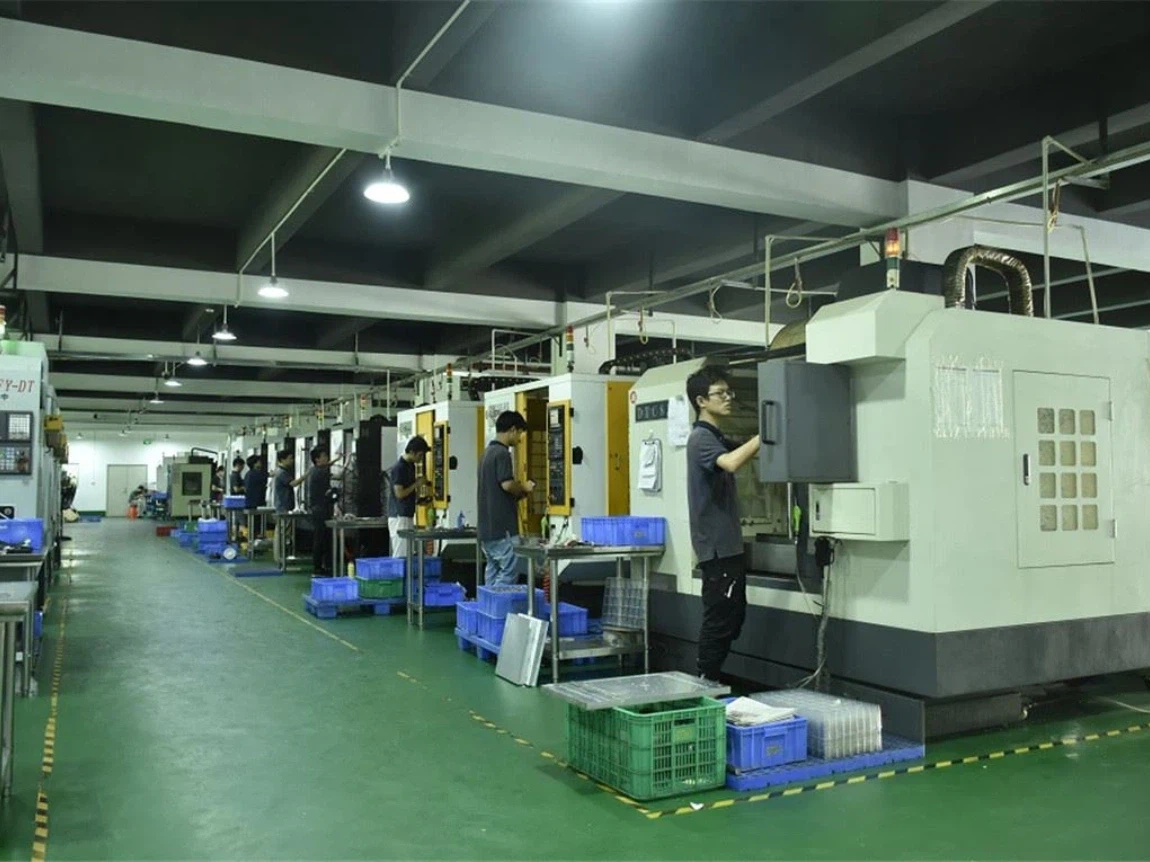
Shenzhen Perfect Precision Products Co., Ltd is a precision engineering manufacturer based in South China Shenzhen, specializing in the supply of high quality machined components in a variety of materials, utilizing the latest CNC turning, CNC milling, Multi-Spindle machining, sheet metal fabrication, injection molding, laser cutting, and stamping technology.
Our Certificate
ISO9001:2015,AS9100D,ISO13485:2016,ISO45001:2018,IATF16949:2016,ISO14001:2015,ROSH,CE etc.
Production Equipment
There are about 50-60 machines, most of which are imported from the United States and Japan, such as HAAS VF-2SS (5 axis) in the United States and TSUGAMI B0206 (6 axis) in Japan.
Our Service
Pre sales service: Customer sends drawings or expresses samples, informs salesman the required materials, surface treatment and order quantity. We can provide quote within 3 hours, 7 days for prototypes, support for OEM/ODM.
-

Aluminum Extruded Mounting Link With CNC Finished Features
Precision Machining Parts. . Machinery Axis: 3,4,5,6. Tolerance:+/- 0.01mm . Special Areas : +/-0.005mm . Surface Roughness: Ra 0.1~3.2 . Supply Ability:500000Piece/Month. 1-Piece Minimum Order . Add to Inquiry -
Lightweight Aluminum Optical Mounting Base With Matte Bla...
Precision Machining Parts. . Machinery Axis: 3,4,5,6. Tolerance:+/- 0.01mm . Special Areas : +/-0.005mm . Surface Roughness: Ra 0.1~3.2 . Supply Ability:500000Piece/Month. 1-Piece Minimum Order . Add to Inquiry -
Custom Panel Mount Handle Metal Mounting Part
Precision Machining Parts. . Machinery Axis: 3,4,5,6. Tolerance:+/- 0.01mm . Special Areas : +/-0.005mm . Surface Roughness: Ra 0.1~3.2 . Supply Ability:500000Piece/Month. 1-Piece Minimum Order . Add to Inquiry -
Custom Pneumatic Clamp Block Metal Fixture Bidirectional ...
Precision Machining Parts. . Machinery Axis: 3,4,5,6. Tolerance:+/- 0.01mm . Special Areas : +/-0.005mm . Surface Roughness: Ra 0.1~3.2 . Supply Ability:500000Piece/Month. 1-Piece Minimum Order . Add to Inquiry -
Precision CNC Turned Brass Black PVD Metal Components
Precision Machining Parts. . Machinery Axis: 3,4,5,6. Tolerance:+/- 0.01mm . Special Areas : +/-0.005mm . Surface Roughness: Ra 0.1~3.2 . Supply Ability:500000Piece/Month. 1-Piece Minimum Order . Add to Inquiry -
CNC Machined Aluminum Cable Installation Bracket
Precision Machining Parts. . Machinery Axis: 3,4,5,6. Tolerance:+/- 0.01mm . Special Areas : +/-0.005mm . Surface Roughness: Ra 0.1~3.2 . Supply Ability:500000Piece/Month. 1-Piece Minimum Order . Add to Inquiry -
High-precision CNC Aluminum Parts Customization Processin...
Precision Machining Parts. . Machinery Axis: 3,4,5,6. Tolerance:+/- 0.01mm . Special Areas : +/-0.005mm . Surface Roughness: Ra 0.1~3.2 . Supply Ability:500000Piece/Month. 1-Piece Minimum Order . Add to Inquiry -
High-precision Aluminum-molded CNC Parts - Multi-step Pre...
Precision Machining Parts. . Machinery Axis: 3,4,5,6. Tolerance:+/- 0.01mm . Special Areas : +/-0.005mm . Surface Roughness: Ra 0.1~3.2 . Supply Ability:500000Piece/Month. 1-Piece Minimum Order . Add to Inquiry -
Precision CNC Stainless Steel Snap-In Mounting Ring
Precision Machining Parts. . Machinery Axis: 3,4,5,6. Tolerance:+/- 0.01mm . Special Areas : +/-0.005mm . Surface Roughness: Ra 0.1~3.2 . Supply Ability:500000Piece/Month. 1-Piece Minimum Order . Add to Inquiry -
High-Precision CNC Stainless Steel Components For Reliabi...
Precision Machining Parts. . Machinery Axis: 3,4,5,6. Tolerance:+/- 0.01mm . Special Areas : +/-0.005mm . Surface Roughness: Ra 0.1~3.2 . Supply Ability:500000Piece/Month. 1-Piece Minimum Order . Add to Inquiry -
High-Precision CNC Aluminum Component
Precision Machining Parts. . Machinery Axis: 3,4,5,6. Tolerance:+/- 0.01mm . Special Areas : +/-0.005mm . Surface Roughness: Ra 0.1~3.2 . Supply Ability:500000Piece/Month. 1-Piece Minimum Order . Add to Inquiry -
High-precision CNC Processing Of Aluminum Camera Lens Com...
Precision Machining Parts. . Machinery Axis: 3,4,5,6. Tolerance:+/- 0.01mm . Special Areas : +/-0.005mm . Surface Roughness: Ra 0.1~3.2 . Supply Ability:500000Piece/Month. 1-Piece Minimum Order . Add to Inquiry


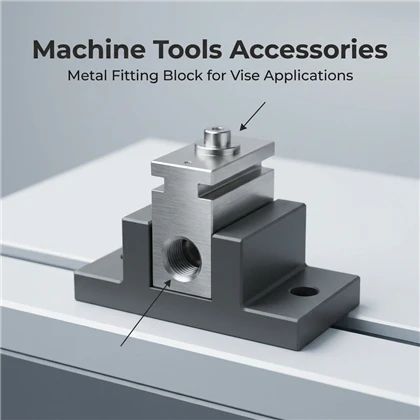

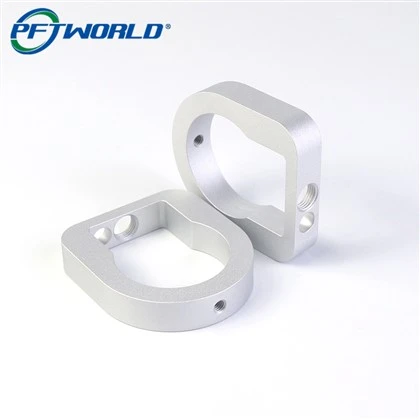

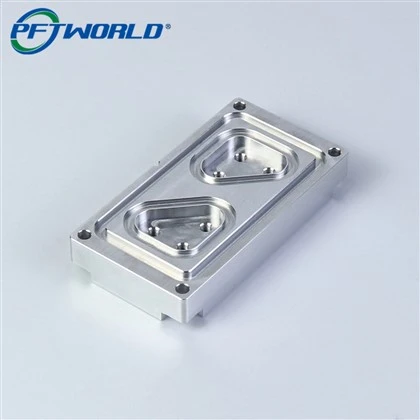


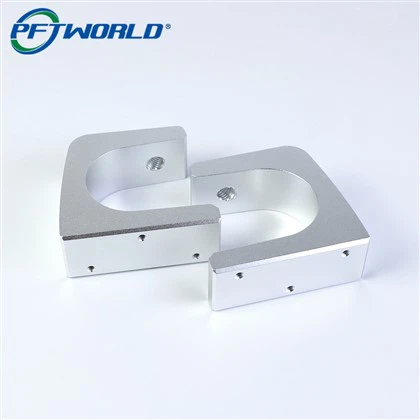
What is CNC Milling
CNC milling is a manufacturing process that uses a cutting tool mounted on a rotating spindle to selectively remove material from a block of raw substrate. The workpiece is rigidly mounted to a table, and this table moves or rotates on different planes so the tool can work at many angles.
It is a computer-controlled process involving using a cutting tool to remove part of a workpiece. The basic setup involves placing the workpiece on the machine’s table while the cutting tool/s attached to the spindle rotates and moves to shape the workpiece into a finished product.
The rotation and movement of the cutting tool depend on the CNC milling machine type and level of sophistication. The process is highly versatile and compatible with various materials such as aluminum, plastics, wood, and glass.

Benefits of CNC Milling
Precision
One of the biggest advantages of using CNC milling machines is that they can create parts exactly to specification. Because CNC mills rely on computer instructions to fabricate parts, they eliminate the possibility of human error common in manually operated machines. This means you can accurately create complex parts while achieving tolerances as tight as 0.004mm.
Fast and Efficient
Conventional milling machines often require an operator to manually change cutting tools depending on the cutting operation to be performed. Not only is this time-consuming, but it is also inefficient as end results are based on the operator’s judgment.
Wide Range of Material Options
CNC mills boast compatibility with a wide range of materials, including plastics, metals, and composites. So long as you’ve got blocks of the material, CNC mills will have no problem machining it.
Affordability
We can talk about precision, speed, and a ton of other advantages all day, but nothing beats affordability, especially for businesses looking to rely on third-party manufacturers. CNC milling is among the most affordable modern-day manufacturing processes. In fact, a CNC milled component would cost you less than a comparable 3D printed part.
Material Options for CNC Milling
01/
Metals
Metal components offer the highest level of precision and durability among all CNC-machined materials. Although they can be costly and susceptible to corrosion in humid environments, metal alloys can eliminate these flaws.
02/
Stainless Steel
Stainless steel is a popular choice for CNC milling due to its strength, corrosion resistance, and relative ease of machining. It is also available in various grades, including SS 303, SS 304, and SS 316. Some common applications of stainless steel include the fabrication of medical instruments, food processing equipment, automotive parts, and architectural components.
03/
Aluminum
Aluminum and its alloys are known for their high strength-to-weight ratios, which translates to lightweight components that can withstand stress. They are also easily machined and have relatively low material costs, resulting in cheaper bulk production runs. Furthermore, several alloys 2024, 5086, 6013, 6061, 6063, and 7075 are utilized for both consumer and industrial electronics, medical devices, aviation, and automotive components, to mention just a few.
04/
Brass
Despite its relatively high price, brass is a popular metal for CNC milling due to its excellent machinability, corrosion resistance, and aesthetic appeal. It also offers a smooth surface finish that can be easily polished for a superior look. Brasses can be grouped into three main categories, non-leaded 200 Series, leaded 300 Series, and Tin brass 400 Series.
05/
Titanium
Titanium is an extremely durable metal with a high level of hardness. It is resistant to corrosion and can endure very high heat levels while being relatively lightweight compared to other steels. It is common in the aerospace industry, sporting equipment, and other applications requiring high strength and durability. However, its very high cost limits its use to only those applications that require its very special properties.
06/
Plastics
Plastics can be used for CNC milling, but several types have different properties and may not be suitable for the intended application. For example, some plastics are easily machined and can yield high-quality finished parts. However, others may be more challenging to machine and produce lower-quality components.
Type of CNC Milling

01
Face Milling
In face milling, the cutting tool’s (face milling cutter) rotating axis is perpendicular to the workpiece surface.
The face milling cutter has a unique design notable in its interchangeable cutter inserts. It delivers cutting action using its multiple cutting teeth. As a result, face-milled parts have higher quality surface finishing.

02
Plain Milling
Plain milling is a column and knee operation used for milling plain horizontal surfaces. The cutting tool lies parallel to the workpiece. Therefore, cutting occurs from one end of the workpiece to the other. Operators can feed the table longitudinally, cross, or vertically.

03
Angular Milling
Angular milling involves milling flat surfaces using a cutting tool at an angle. The process is like plain milling, the only difference being the angular setup.
There are two angular milling cutters: single angle and double angle. The single-angle cutters have teeth on the cutter’s angular face and large flat sides and are suitable for working at angles of 450 or 600.

04
Form Milling
Form milling is the better method for making irregular contours on a workpiece. The contour can be curved or curved with straight lines. The contours can be concave or convex and are made with teeth opposite such shapes. Consequently, to make a product with a concave edge, the form milling cutter should have a convex edge.
Applications of CNC Milling
Milling is highly accurate, precise, and with high tolerance. Hence it has a wide range of applications. Below are some of its industrial applications.
Aerospace
Computer numerical control milling is applicable in making many aeronautic components using materials such as Titanium and Aluminum. These materials are lightweight and durable. Due to the high need for accuracy and precision, the process is considered suitable.
Automotive
The automotive industry uses milling machining due to the requirement for efficiency without losing accuracy. Therefore, it is suitable for products made using the process include interior panels, cylinder heads, drive axles, suspension components, exhaust parts, and gearboxes.
Agriculture
CNC milling machining is suitable for making general purpose parts and components such as gears and shafts, nuts and bolts, and flanges. Furthermore, it is suitable for both large-scale and short-term production capabilities.
Medical
Medical parts such as prostheses require precise and unique design. Therefore, CNC milling is the better method for such parts. The design is retained, and there is productivity and efficiency.
What is the Difference Between CNC Milling and CNC Turning
The short answer is that milling rotates the cutting tool against a fixed workpiece fastened to a movable worktable. Milling typically uses square or rectangular bar stock to produce finished parts. On the other hand, the lathe rotates the workpiece against a single-point lathe tool, and round bars are its typical raw material.
Both processes are subtractive and produce metal chips, but they use different materials, methods, and tools to make parts and components. Milling and turning are appropriate for steel, cast iron, aluminum, steel, brass, and copper. And because these manufacturing techniques can generate heat, they often require cutting fluid or coolant.
How Does CNC Milling Work
Designing the CAD Files
The first phase involves creating a virtual representation of your intended product using CAD software. You can use different CAD-CAM programs to develop the needed G-code for machining. It is essential to translate the CAD design into a CNC programming language because that is what the machine will understand.
Setting Up the Milling Machine
Although the CNC milling machines automatically cut the workpieces, some aspects of the process require a machine operator.
Modern milling machines have live tooling capabilities. Therefore, they have the ability to change tools during the milling process. This reduces the number of stops that will occur during the operation. However, there’s still a need for initial setup and program checks before starting the process.
Producing the Components
As mentioned earlier, CNC milling uses a rotating tool(s) that cut off chips when it contacts the workpiece. Continuous rotation of the tool gives the desired shape. The process may comprise different operations depending on the type of raw material and desired shape of the final product.
Components of CNC Milling


The machine contains several components with different functions to deliver the cutting action. Every CNC miller differs in the sophistication and design of these components. Nevertheless, their functions don't change. Below are the general components you will see in one
Frame
The frame is responsible for the stability and rigidity of the machine. It houses other components such as the base, detachable columns, and headstock (an important component that houses the spindle).
Spindle
The spindle is the entire rotating unit of the milling machine comprising the shaft that holds the cutting tools and other parts. It is either horizontal or vertical, depending on the milling machine. A motor rotates the spindle on the axis determined by the CNC controller.
Axes
The general axes are x (vertical), y(horizontal), and z(depth). However, other rotating axes are included based on some machines; A, B, and C.
Different machines can rotate along the axis depending on their sophistication. For example, 4-axis CNC milling machines can rotate on the A-axis while 5-axis can rotate on the A and C axes or B and C axes.
Columns
The columns rest on the base containing a coolant reservoir and a pump. Therefore, it functions as a support in the machine’s cooling during the cutting process. The column can be single. However, this depends on the machine's complexity.
CNC Control Panel
The CNC comprises a CNC monitor and programming buttons for entering data and codes. Therefore, it controls the milling process. As a result, it is the nervous system of the machine. `
Automatic Tool Changer (ATC)
The ATC functions in changing tools during the milling process. Therefore, it increases the speed, tool carrying capacity, and productivity of the machine.
How to Maintain CNC Milling
At any time when you encounter an unexpected situation, press the emergency stop button as soon as possible.
Check the level of the machine every 6 months to ensure that the level is controlled within 0.02 / 300.
When not in use for a long time, after turning on the machine, first return the machine to its original point, and then warm up the spindle for about 30 minutes.
The filter of the oil cooler should be cleaned in time, which can reduce the power consumption of the oil cooler and improve the cooling efficiency.
Before each machining stop, move the three axes to the middle position, and then power off to clean the machine.
Check the oil level of the spindle oil cooler every 2 months.
The water in the air of the air source filter should be drained in time.
Adjust the tool coolant valve to cool the cutting area of the tool with an appropriate flow.
Do not use a high-pressure air gun to clean up after processing. Use cutting water as much as possible.
When using water-soluble cutting fluid, adjust the water-oil ratio.
The tool setting instrument is a very precise measuring instrument. If the surface is not clean, it will affect the measurement accuracy. Therefore, it should be protected by a protective cover when it is not in use.
Our Factory
Shenzhen Perfect Precision Products Co., Ltd is a precision engineering manufacturer based in South China Shenzhen, specializing in the supply of high quality machined components in a variety of materials, utilizing the latest CNC turning, CNC milling, Multi-Spindle machining, sheet metal fabrication, injection molding, laser cutting, and stamping technology.


FAQ
We're professional cnc milling manufacturers and suppliers in China, specialized in providing high quality customized products. We warmly welcome you to buy cnc milling for sale here from our factory. For quotation, contact us now.
smartbench cnc, CNC 5 axis milling, cnc automation