

Company Profile
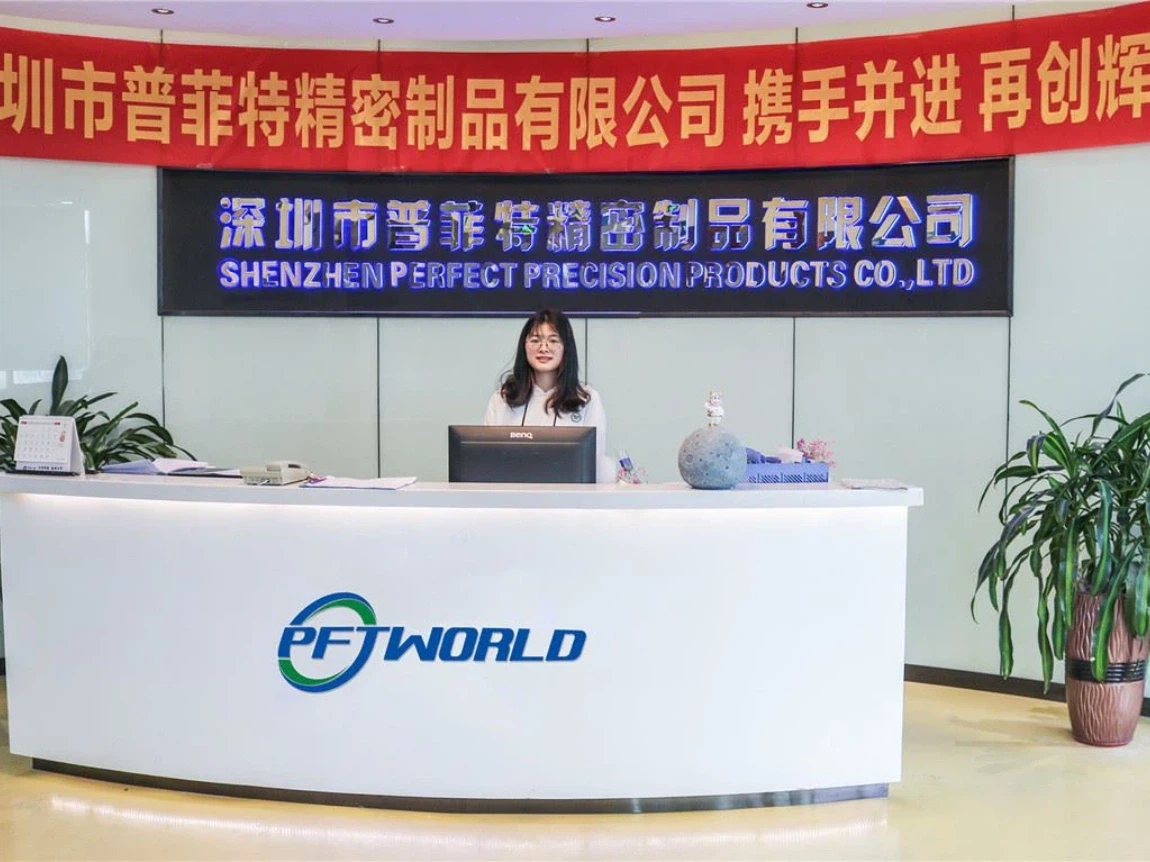
Shenzhen Perfect Precision Products Co., Ltd was established in 2012 with a registered capital of 1 million. It established a foreign trade team in 2014, passed the IS09001 quality system certification. It was awarded the title of Guangdong Contract and Trustworthy Enterprise in 2018, and passed the certification of high-tech enterprise and intellectual property management system in 2019. In 2020, the office area has been expanded to 5000 square meters, the total number of employees has reached 70, and the digital chemical plant has been realized in 2021.
Why Choose Us
Our Factory
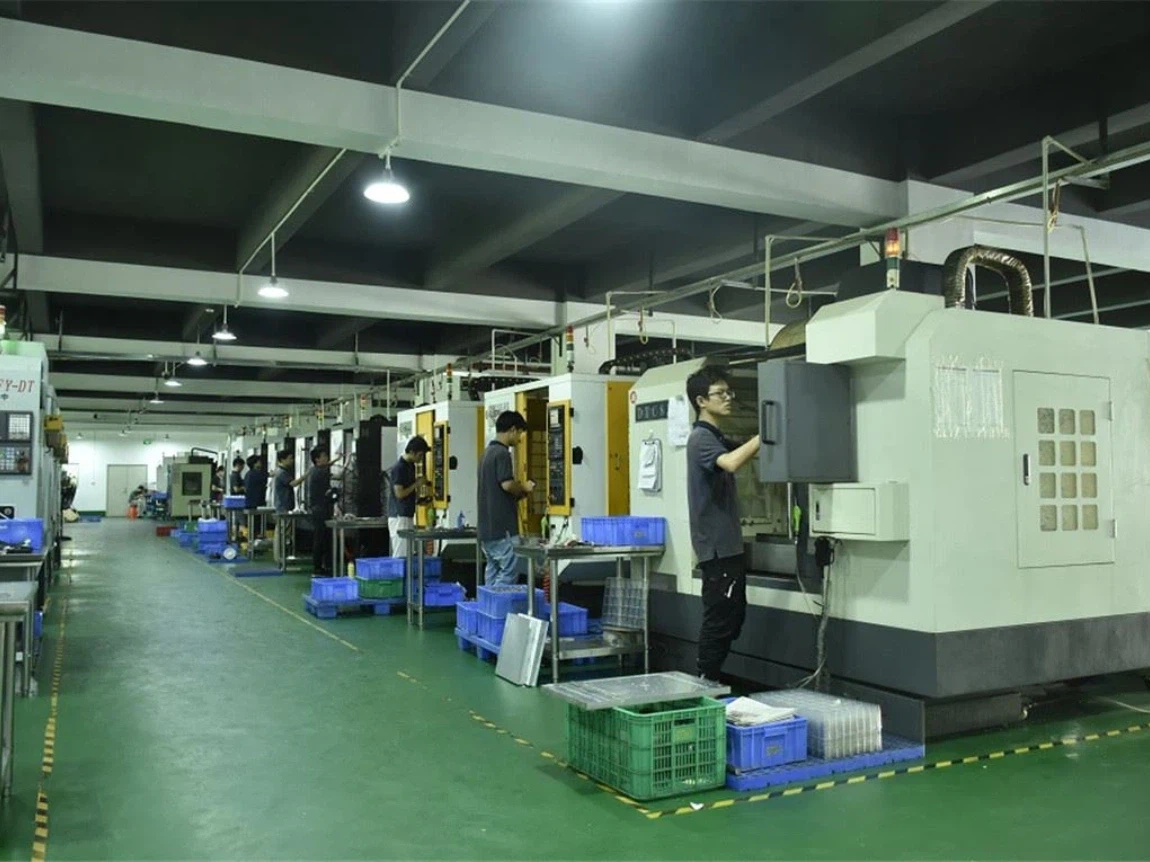
Shenzhen Perfect Precision Products Co., Ltd is a precision engineering manufacturer based in South China Shenzhen, specializing in the supply of high quality machined components in a variety of materials, utilizing the latest CNC turning, CNC milling, Multi-Spindle machining, sheet metal fabrication, injection molding, laser cutting, and stamping technology.
Our Certificate
ISO9001: 2015, ISO13485:2016, 16949, AS910
Production Equipment
There are about 50-60 machines, most of which are imported from the United States and Japan, such as HAAS VF-2SS (5 axis) in the United States and TSUGAMI B0206 (6 axis) in Japan.
Our Service
Pre sales service: Customer sends drawings or expresses samples, informs salesman the required materials, surface treatment and order quantity. We can provide quote within 3 hours, 7 days for prototypes, support for OEM/ODM.
-

Black Anodized Aluminum Equipment Mounting Base Structura...
Precision Machining Parts. . Machinery Axis: 3,4,5,6. Tolerance:+/- 0.01mm . Special Areas : +/-0.005mm . Surface Roughness: Ra 0.1~3.2 . Supply Ability:500000Piece/Month. 1-Piece Minimum Order . Add to Inquiry -
Custom 5052 Aluminum Sheet Metal Mounting Bracket Laser C...
Precision Machining Parts. . Machinery Axis: 3,4,5,6. Tolerance:+/- 0.01mm . Special Areas : +/-0.005mm . Surface Roughness: Ra 0.1~3.2 . Supply Ability:500000Piece/Month. 1-Piece Minimum Order . Add to Inquiry -
Laser Cutting CNC Milling Cutting 304 Steel Parts
Precision Machining Parts. . Machinery Axis: 3,4,5,6. Tolerance:+/- 0.01mm . Special Areas : +/-0.005mm . Surface Roughness: Ra 0.1~3.2 . Supply Ability:500000Piece/Month. 1-Piece Minimum Order . Add to Inquiry -
Laser Cutting Machine
Place of Origin: Guangdong, China. Brand Name: PFT. Certification: ISO9001:2015,AS9100D,ISO13485:2016,ISO45001:2018,IATF16949:2016,ISO14001:2015,RoSH,CE etc.. Model Number: OEM. Payment & Shipping Add to Inquiry -
Laser Cutting Service
Precision Machining PartsMachinery Axis: 3,4,5,6Tolerance:+/- 0.01mmSpecial Areas : +/-0.005mmSurface Roughness: Ra 0.1~3.2Supply Ability:500000Piece/Month1-Piece Minimum Order3-Hour Add to Inquiry -
Sheet Metal Laser Cutting Parts
Precision Machining Parts. . Machinery Axis: 3,4,5,6. Tolerance:+/- 0.01mm . Special Areas : +/-0.005mm . Surface Roughness: Ra 0.1~3.2 . Supply Ability:500000Piece/Month. 1-Piece Minimum Order . Add to Inquiry -
Laser Cutting Service Machining Parts
Laser Cutting service machining parts Quick details: Trademarks: 7 Swords Color: customized any color Size: make based on customers' requests Surface treatment: customer requirements Business Add to Inquiry -
Good Quality Sheet Metal Laser Cutting
Good Quality Sheet Metal Laser Cutting parts have high coordination requirements and the superior quality with the advanced machining equipment.. . Precision Machining Parts. . Machinery Axis: Add to Inquiry -
Stainless Steel Fabrication Laser Cutting
We use advanced equipment to provide you with CNC machining services. Our experienced engineers can use a variety of metal materials to make parts.. Precision Machining Parts. . Machinery Axis: Add to Inquiry -
High Precision Laser Cutting
High Precision Laser Cutting parts have complex shapes and high matching requirements.. Precision Machining Parts. . Machinery Axis: 3,4,5,6. Tolerance:+/- 0.01mm . Special Areas : +/-0.005mm . Add to Inquiry -
High Quality Laser Cutting
High quality laser cutting has good quality and high machining precision, and is widely used in various fields. Add to Inquiry -
Machining Laser Cutting Small Plastic Parts
Machining laser cutting small plastic parts has the characteristics of high machining precision and mass production. Add to Inquiry
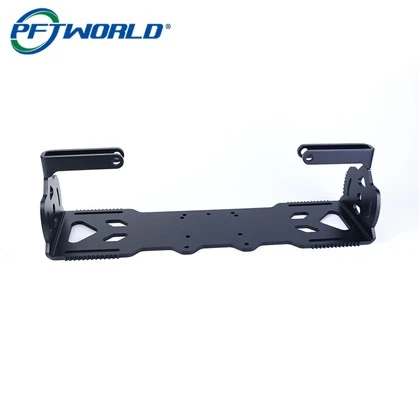


What is Laser Cutting
Laser cutting is a non-traditional processing method that uses an intensely focused stream of coherent light called a laser to cut material. It is a subtractive process in which the material is continuously removed during the cutting process. This is accomplished by vaporization, melting, chemical ablation, or controlled crack propagation.
The laser optics are digitally controlled by CNC (Computer Numerical Control), making the process suitable for drilling holes as small as 5 microns. In addition, the process does not create residual stresses in the material, allowing the cutting of delicate and fragile materials.

Benefits of Laser Cutting
Flexibility
Laser cutting does not require an exchange of tools for each separate cut. The same setup is suitable for cutting a lot of different shapes within the same material thickness. Also, intricate cuts do not pose any problems.
Precision
Accuracy is one of the primary advantages of laser cutting when compared to other thermal cutting methods.
An accuracy of +/-0.1 mm gives an opportunity to achieve high precision without any after-treatment. In most cases, such a high standard means that no added tolerances are required.
Automation
The job needs little manpower as contemporary laser cutting machinery is highly automated. An experienced machine operator still plays a big role in the final quality but the speed of cutting and little need for manual labour result in lower costs compared to other cutting methods.
Quality
Using the right setup, laser cutters only leave a small burr. Often, it is not necessary to even remove it. Of course, it depends on the material, its thickness and other factors.
Another perk is having a small heat affected zone. As the microstructure along the HAZ changes, a smaller HAZ area results in more predictable and reliable parts.
Contactless Cutting
In case of laser cutting, only the beam comes into contact with the material. Therefore, there is no mechanical friction that could wear tools.
Type of Laser Cutting


CO2 Lasers
A CO2 laser runs electricity through a gas mixture-filled tube, producing light beams. The tubes contain mirrors on each end. One of the mirrors is fully reflective and the other is partial, letting some of the light through. The gas mixture is usually carbon dioxide, nitrogen, hydrogen and helium. CO2 lasers produce invisible light, in the far infrared range of the light spectrum.
Fiber Lasers
This class of machines is part of the solid-state laser group and uses the seed laser. They amplify the beam using specially designed glass fibers that derive energy from pump diodes. Their general wavelength is 1.064 micrometers, producing an extremely small focal diameter. They are also typically the most expensive of the various laser-cutting devices.
Nd:YAG/Nd:YVO Lasers
Crystal laser cutting processes can be in nd:YAG (neodymium-doped yttrium aluminium garnet), but more commonly they tend to use nd:YVO (neodymium-doped yttrium ortho-vanadate, YVO4) crystals. These devices allow an extremely high cutting power. The drawback of these machines is that they can be expensive, not just because of their initial price but also because they have a life expectancy 8,000 to 15,000 hours (with Nd:YVO4 being having a typically lower one) and the pump diodes can net a very hefty price.
How Do Laser Cutting Work
A laser cutting machine works similarly to a CNC machine, but it uses a high-power laser. The laser will guide the material or beam through the CNC and optical equipment. The machine will use the CNC, or G-code provided, to cut the material and control the motion.
After the laser beam is focused, the material will melt, vaporize and burn. In addition, when you blow the material with a gas jet, you can obtain a high-quality finished edge surface. The laser beam generation takes place in a closed container, where a lamp or electrical discharge stimulates the luminescent material.
The amplification of the luminescent material occurs after internal reflection through a partial mirror. This phenomenon continues until enough energy has accumulated in a coherent monochromatic light stream to allow it to escape. The intensity of the light increases after it has been focused on the working area using a fiber or mirror.
The laser beam diameter is below 0.32 mm at its thinnest edge. Conversely, the width of the incision can potentially be as small as 0.10 mm. However, this depends on the thickness of the material. If the material is cut with a laser cutter without starting from the edge of the material, then a perforation process is used.
What Materials Can Be Cut With a Laser Cutter
Metals & Alloys
Metals are some of the most popular laser-cutting materials. Traditionally, manufacturing techniques are slow, expensive, and require hours of hands-on training. Laser cutting is a more accessible technology that allows anyone with basic know-how to cut through the toughest metal parts.
Wood
Laser-cutting wood has seen a steady rise in recent years. The modern furniture industry has already shifted to laser-cut wood design for its catalog. A drawback of laser cutting wood is accidental burning. Wood is flammable, and laser cutting often leaves char marks on cut edges.
Wood veneers are a popular choice for many designers. They use laser cutting to create veneer stickers that go on top of other inexpensive materials.
Plastics
Plastics are generally very soft and thus very difficult to cut and shape with traditional processes. Sawing, drilling, and milling result in the plastic melting and deforming. Hence, laser cutting plastic has grown in popularity with the wide availability of low-wattage laser cutters.
Textiles
Laser cutting supports various materials, including several fabric options. Fabrics tend to fray at the edges and require additional post-processing to stop the material from unraveling. The threat of fraying limits intricate pattern designs.
Laser cutting cauterizes the edges as it cuts through the fabrics, making it a more effective solution for textile design. As fabrics burn easily, you will need to fine-tune your laser-cutter settings. Keep the laser power low and the cutting speed high to get the best results.
Rubber
Rubber materials share some key traits with plastic and textiles, such as softness and flexibility, that make traditional cutting more difficult. Laser cutting can precisely cut thick and thin rubber sheets in seconds.
High-performance rubber gaskets and seals benefit from the excellent CNC precision of laser cutters. Most of today’s rubber gaskets are made from synthetic materials.
Foam
Fiber lasers are excellent at processing any material that is soft and delicate. A laser beam can cut through the most delicate materials without melting, bringing, or deflating. Hence, laser cutting foam is a natural fit for most manufacturers.
Precision-cut foam is used for various packaging, shock-proofing, and soundproofing applications. Laser cutting foam is compatible with various thicknesses of polymers.
Application Of Laser Cutting
Automotive industry
Laser cutting has found a home in the automotive industry due to its ability to reproduce parts with relative speed and accuracy. Accurate reproduction of parts of various forms and sizes is critical in the automotive sector. Laser cutting is used to cut metals and plastics to form body parts, electronic components, interior covers and buttons for automobiles.
Mold and tooling industry
As previously noted, laser cutting can be utilized to make molds for duplicate parts. Using the laser’s ability to cut different depths in metal, extremely accurate molds can be created for stamped parts that can be used consistently through a repetitive die-cutting process.
Jewellery industry
The precision of laser cutting makes it easy to use in jewellery making processes. For example, imagine a watch with many small gears. Lasers are cut with precision to make gears with less waste and production time. In addition, the laser’s engraving capabilities allow parts to be marked during the manufacturing process.
Ceramic manufacturing
Ceramics have various qualities that enable engineers to employ them in various applications. Their low electrical and thermal conductivity make them excellent insulators. They do not react with other chemicals, have a high melting point, and are extremely durable. Lasers are often used to cut ceramics because they reduce processing time without sacrificing edge quality. Aircraft jet engines, electric motors, speakers, headphones, power plant generators, rice cookers, and even incandescent lamps have ceramic parts.
Silicon manufacturing
Another material that can benefit from laser cutting is silicon, which has many applications. Precision cutting allows engineers to produce smaller silicon parts than those made using other cutting methods. Silicon is resistant to high temperatures and aging, and it is easy to work with. Typical applications for silicon are found in computers, electronics, textiles, household products, automobiles and construction.
What are the Steps in the Laser Cutting Process

Step 1: Material Selection
The properties of the workpiece material will influence the choice of cutting method. Along with factors like price and visual appeal, it’s important to consider reflectivity, which determines the appropriate type of laser cutting equipment. Also consider the thickness of the workpiece. While the maximum thickness varies based on the specific equipment and material, laser cutters generally can’t cut extremely thick metal workpieces. Maximum thickness limits raise significantly with wood, plastics, and other non-metals.

Step 2: Design
CNC laser cutting machines can follow instructions derived from digital design files to direct spindles or attachments on the X or Y axis of the machine. As a largely automated process, CNC laser cutting can reproduce cuts across workpieces in a production run with a high rate of accuracy and repeatability. Engineers can also control the power of the laser to account for changes in depth, to increase cutting speed, and to moderate cut quality.

Step 3: Laser Settings
There are four settings that operators should keep in mind as they set up the laser cutting machine:
Laser power. High-power lasers can cut through workpieces and complete products faster than low-power lasers, but they also consume more power and drive up production costs.
Wavelength. The wavelength helps determine the extent to which a laser beam can heat up, melt through, and cut workpieces.
Beam mode. The beam mode measures the intensity of the beam and the diameter of the laser’s focal spot. Both factors affect the precision and quality of the cut.
Components of Laser Cutting
Fiber Laser: The fiber laser is the heart of the laser cutting machine and one of the most costly components. It directly affects the performance of the cutting device and the entire cutting process.
Machine Tool Main Body: This includes the cutting work platform used to place the workpiece to be cut and can move precisely according to the control program. The machine tool part realizes the movement of the X, Y, and Z axes and forms the foundation for the cutting operation.
Beam Transmission Components: These include beam expanders, protective lenses, and others. These components can alter the diameter and divergence angle of the laser beam while protecting the lens from debris splash damage.
Cooling System: The laser cutting process generates a significant amount of heat, hence the need for a cooling system to maintain normal operation and extend the life of the equipment. The cooling system typically includes a circulating water cooling and air cooling system.
Gas Supply System: This provides auxiliary gases for the cutting process, such as oxygen and nitrogen. These gases serve to cool and clean the cutting area, enhancing the cutting quality and efficiency.
Laser Cutting Head: This includes the cavity, focusing lens holder, focusing lens, and other components. The driving device is used to move the cutting head along the Z-axis direction according to the program, achieving precise cutting of the material.
Microcomputer Numerical Control Cabinet: This controls the entire cutting device’s operation process. All operating commands for the fiber laser cutting machine are issued from here.
How should the laser cutting machine be maintained every day?
Lubrication of linear guide
The smoke and dust generated by the laser cutting machine after a period of use have a corrosive effect on the guide rail, so the guide rail should be maintained regularly. Turn off the power of the laser cutting machine, clean the guide rail with a clean soft cloth, and then drip the lubricant on the guide rail. After the oil is applied, let the slider roll back and forth on the guide rail to ensure that the lubricant enters the inside of the slider. After the oiling, the slider is rolled back and forth on the guide rail.
Mirror, focusing lens wipe
After using the laser cutting machine for some time, smoke and dust will adhere to the surface of the lens, affecting the depth of engraving and cutting, as well as the accuracy of engraving and cutting. Generally, around three weeks (according to the frequency of use of the laser cutting machine and engraving machine), the three mirrors and one focusing mirror are carefully wiped clean with absolute alcohol.
Bearing oil
The laser cutting machine uses a large number of bearings. To ensure good cutting and engraving effects, some bearings need to be refueled regularly (except for oil-containing bearings). Wipe the floating soil on the bearings with a clean soft cloth. The needle is slowly injected into the bearing, and the bearing can be rotated slowly during oil filling.
Belt (drive belt) elastic adjustment
There are several timing belts in the drive system of the laser cutting machine. If the timing belt is too loose, the engraving font will appear ghosting. If the timing belt is too tight, the timing belt will be worn. After using it for a while, please adjust the tensioning screws of the timing belt to adjust the timing belt to proper tension. The engraving text does not appear ghosting, and the laser cutting machine runs with low noise.
Maintenance of laser tube
The laser tube in the laser cutting machine is cooled by circulating water. After long-term use, there will be some white scale in the tube. We can add a small amount of vinegar to the circulating water, remove the water channel in the tube, and then use a clean Water flushes the inside of the laser tube so that the laser tube will be in the best working condition and the life will be extended.
Our Factory
Shenzhen Perfect Precision Products Co., Ltd is a precision engineering manufacturer based in South China Shenzhen, specializing in the supply of high quality machined components in a variety of materials, utilizing the latest CNC turning, CNC milling, Multi-Spindle machining, sheet metal fabrication, injection molding, laser cutting, and stamping technology.

FAQ
We're professional laser cutting manufacturers and suppliers in China, specialized in providing high quality customized products. We warmly welcome you to buy laser cutting for sale here from our factory. For quotation, contact us now.
laser cutting aluminium parts, CNC machining parts with laser cutting, laser engraver and cutter