

Market Background
Orthopedic implant manufacturing in 2026 is characterized by two competing pressures: increasingly complex geometries for improved patient outcomes, and relentless cost reduction from hospital purchasing groups. U.S. medical device OEMs are seeking CNC partners who can deliver both-tight tolerances on biocompatible materials, at volumes that justify automated production without the overhead of fully captive manufacturing.
Client & Application Scenario
A Minnesota-based orthopedic OEM approached PFT in Q3 2025 with a challenging requirement: Ti-6Al-4V ELI (Extra Low Interstitial) tibial tray components with a dual-surface finish. The articulating surface needed mirror-like polishing (Ra < 0.4 μm) for polyethylene insert compatibility, while the bone-contact surface required a controlled roughness pattern (Ra 3.2–6.3 μm) to promote osseointegration.
Volume: 2,000 units annually, with FDA submission requiring full process validation and material traceability back to the mill certification.
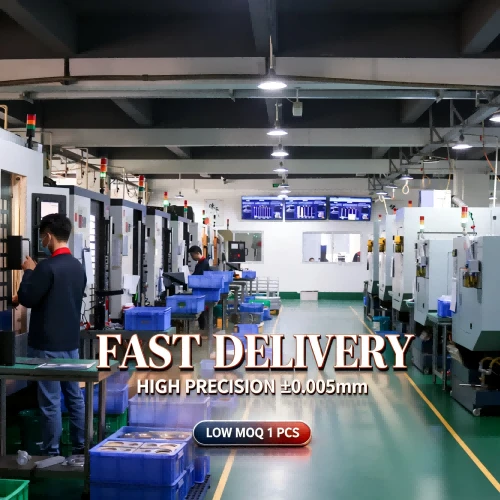
Our Solution
PFT deployed our dedicated medical machining cell, operating under ISO 13485 protocols:
Material control: Ti-6Al-4V ELI bars with mill test reports, lot-tracked from receipt to finished part
Machining strategy: 5-axis roughing to near-net shape, followed by 3-axis finish passes with custom ceramic tooling to avoid titanium's galling tendency
Surface engineering: Controlled blasting with alumina media for the bone-contact surface, followed by passivation per ASTM F86
Inspection: 100% CMM dimensional verification, plus surface roughness profiling on both critical surfaces
The critical innovation was our tooling sequence. Titanium's low thermal conductivity causes heat buildup at the cutting edge, leading to work hardening and premature tool failure. We developed a high-pressure coolant delivery protocol (70 bar through-tool) that keeps the cutting zone below the critical temperature threshold.
Results
Dimensional accuracy: 100% of parts within ±0.025mm on all critical dimensions
Surface finish compliance: 99.7% pass rate on both articulating and bone-contact surfaces
Tool life: 40% improvement over initial process development, reducing per-part tooling cost
FDA submission support: Complete process validation documentation (IQ/OQ/PQ) provided
Client Feedback & Summary
The client's regulatory affairs director commented: "PFT's documentation package was submission-ready. We didn't have to rewrite their process descriptions or reformat their data. That saved us roughly six weeks in our 510(k) preparation."
For medical device manufacturers, time-to-market is as critical as part quality. At PFT, we've structured our quality system to produce not just good parts, but good documentation-because in regulated industries, the paperwork is part of the product.