

Weight reduction has always been a priority in aerospace manufacturing, but it cannot come at the expense of strength or dimensional accuracy. This is why more engineers are turning to CNC Machined Carbon Fiber Parts for prototypes, interior components, brackets, fixtures, and UAV structures.
One issue we often see during prototype development is that composite parts look perfect after molding but require additional machining before assembly. Hole locations, edge profiles, and mounting surfaces frequently need tighter tolerances than the molded part can provide. CNC machining allows these features to be finished accurately without producing a new mold for every design revision.
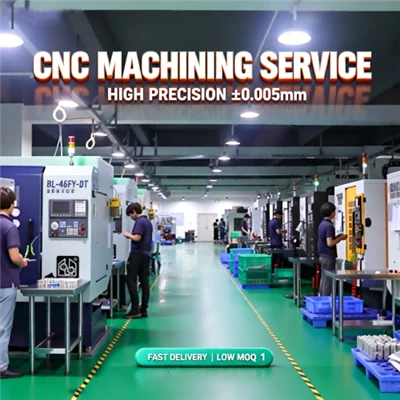
Carbon fiber, however, is not the easiest material to machine. Tool wear, edge chipping, and delamination become real concerns if cutting parameters are not properly controlled. In our experience, stable fixturing, sharp diamond-coated tools, and effective dust extraction are just as important as machine accuracy. Small process adjustments often improve edge quality more than simply increasing spindle speed.
For aerospace manufacturers, the biggest advantage is flexibility. CNC Machined Carbon Fiber Parts support rapid engineering changes, low-volume production, and consistent dimensional quality during product development. As aircraft, satellites, and unmanned systems continue to demand lighter structures, precision machining remains an essential step in turning composite materials into reliable, assembly-ready components.