

1. Influence of workpiece material and structure on workpiece deformation
The amount of deformation and the complexity of shape, length, width and wall thickness are in direct proportion to the rigidity and stability of the material. Generally, the influence of these factors on workpiece deformation should be reduced when designing parts. Especially in the structure of some large parts, the structure should be reasonable. In the process of machining, it is necessary to control the hardness, looseness and other defects of the blank to ensure the quality of the blank and reduce the deformation of the workpiece.

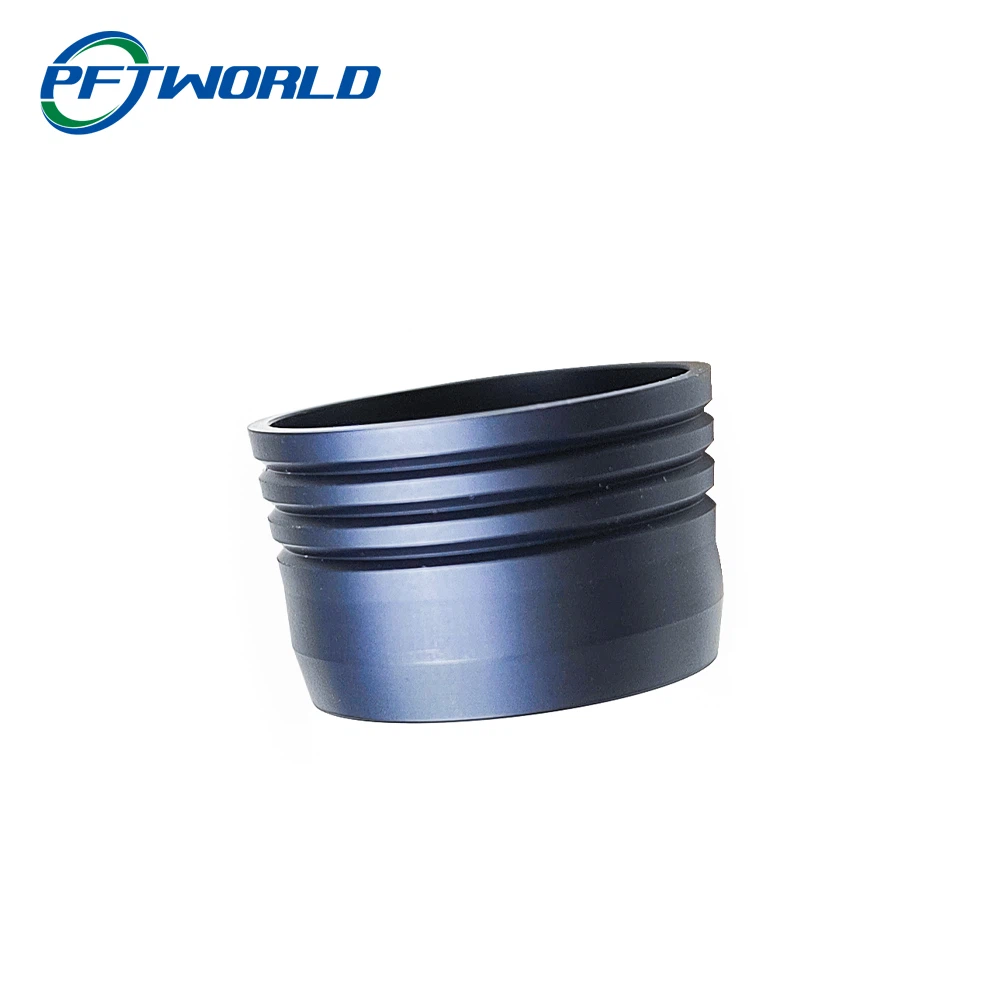
2. Deformation caused by workpiece clamping
When clamping the workpiece, it is necessary to select the correct clamping point and the appropriate clamping force at this position. Therefore, it is necessary to keep the clamping point consistent with the support point, so that the clamping force acts on the support. The clamping point should be as close to the machining surface as possible, and the position where the force is not easy to cause clamping deformation should be selected.
When there are clamping forces acting in several directions on the workpiece, the sequence of clamping forces needs to be adjusted. The clamping force should act first to make the workpiece contact with the support, which is not easy to be too large. The main clamping force that balances the cutting force should act last.
Secondly, the contact area between the workpiece and the fixture and the axial clamping force should be increased. Strengthening the rigidity of parts is very effective for solving clamping deformation. However, due to the shape and structural characteristics of thin-walled parts, they will have low rigidity. In this way, deformation will occur under the action of clamping force.
3. Deformation caused by workpiece processing
In the process of cutting, due to the cutting force, the workpiece will produce elastic deformation in the direction of the force, which is the phenomenon of making a knife. For similar deformation, corresponding measures can be taken on the tool. When finishing, the tool is required to be sharp. On the one hand, this can reduce the resistance formed by the friction between the tool and the workpiece. On the other hand, it is to improve the heat dissipation ability of the tool when cutting the workpiece, so as to reduce the residual internal stress on the workpiece.
In machining, the heat generated by the friction between the tool and the workpiece will also deform the workpiece, and high-speed machining is generally selected. In this kind of machining, because the chips are removed in a short time, most of the cutting heat is taken away by the chips, which can effectively reduce the deformation.
In order to ensure the accuracy of parts, it is necessary to adopt reasonable cutting parameters in the machining process. When machining thin-walled parts with high precision requirements, symmetrical machining is generally adopted to balance the stress generated on the opposite two sides to reach a stable state, and the workpiece is flat after machining.