

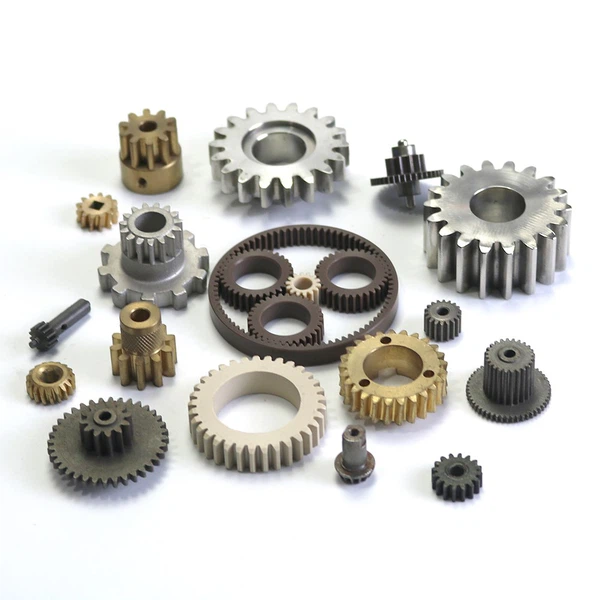
Gears are an integral part of our mechanical world, transmitting power in everything from bicycles to industrial machinery. Despite their ubiquity, the physical principles that govern their function remain a mystery to many. Let's dive in and learn about gears.
Basics: What are gears?
At their core, a gear is a toothed mechanical component that meshes with another toothed component to transmit torque (rotational force) from one part of a machine to another. This seemingly simple interaction plays a key role in countless applications, enabling speed reduction, torque multiplication, and direction changes.
Types of gears and their applications
Spur gears
Perhaps the most common type, spur gears have teeth that are parallel to the axis of rotation. They are used in applications requiring precise positioning and high efficiency, such as watches, clocks, and automotive transmissions.
01
Helical gears
Helical gears have helical teeth that gradually engage and disengage, and they run smoother and quieter than spur gears. They are widely used in automotive transmissions and heavy machinery.
02
Bevel Gears
Bevel gears have tapered teeth and are used in applications that require a change of direction between intersecting shafts, such as differential gears in hand drills and automobiles.
03
Worm Gears
Worm gears consist of a spiral-shaped gear (worm) that meshes with a worm wheel, enabling high torque transmission in a compact design. They are often used in conveyor systems and elevators.
04
Precision Engineering: Designing Efficient Gears
The design of gears involves complex calculations to ensure smooth operation and reduced wear. Engineers consider factors such as tooth shape, pitch diameter, pressure angle, and backlash to customize gears. Advanced computer simulation and manufacturing techniques, including CNC machining and hobbing, are now available for gear production, which ensures that high-precision and durable gear components can be produced.
As technology advances, gears will continue to evolve. Materials such as lightweight composites and advanced alloys are used in gear production, making gear parts stronger and lighter. So next time you may be amazed by the smooth operation of your bicycle or the quiet hum of your car's transmission.