

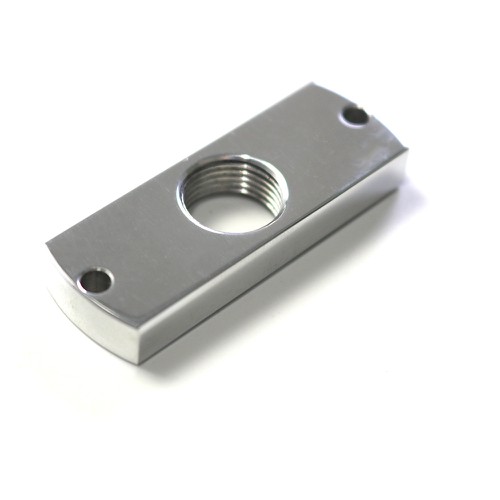
Learn realistic CNC aluminum machining tolerance ranges, when ±0.01mm aluminum CNC is achievable, and how to design precision aluminum CNC parts for stable, cost-effective production.
CNC Machining Aluminum Parts: Typical Tolerances and What's Realistic
CNC machining aluminum parts is widely used in medical devices, automation, electronics, and industrial equipment due to aluminum's excellent machinability and strength-to-weight ratio. However, one of the most common questions from engineers and buyers is: What CNC aluminum machining tolerance is truly realistic?
For most standard CNC milling and turning operations, a general aluminum tolerance of ±0.05 mm is both economical and stable. With proper fixturing, calibrated machines, and controlled environments, tighter tolerances such as ±0.02 mm are achievable for functional features.
Achieving ±0.01mm aluminum CNC tolerance is possible, but only under specific conditions. This level of precision typically requires optimized tool paths, temperature control, stress-relieved material, and experienced operators. It is most suitable for critical mating surfaces, bearing seats, or medical-grade precision aluminum CNC parts.
Design also plays a key role. Over-specifying tight tolerances on non-functional features increases machining time and cost without improving performance. A balanced tolerance strategy ensures consistency, higher yield, and faster delivery.
Understanding what's realistic in CNC aluminum machining helps designers reduce risk while maintaining performance and quality.
Need precision aluminum CNC parts with reliable tolerances?
📩 Contact us for DFM support, tolerance evaluation, and fast-turn CNC machining from prototype to low-volume production.