


Mainstream Precision CNC Machining
Machinery Axis: 3,4,5,6
Tolerance:+/- 0.01mm
Special Areas : +/-0.005mm
Surface Roughness: Ra 0.1~3.2
Supply Ability:500000Piece/Month
1-Piece Minimum Order
3-Hour Quotation
Samples: 1-3 Days
Lead time: 7-14 Days
Certificate:Medical,Aviation,Automobile,
ISO9001:2015,AS9100D,ISO13485:2016,ISO45001:2018,IATF16949:2016,ISO14001:2015,RoSH,CE etc.
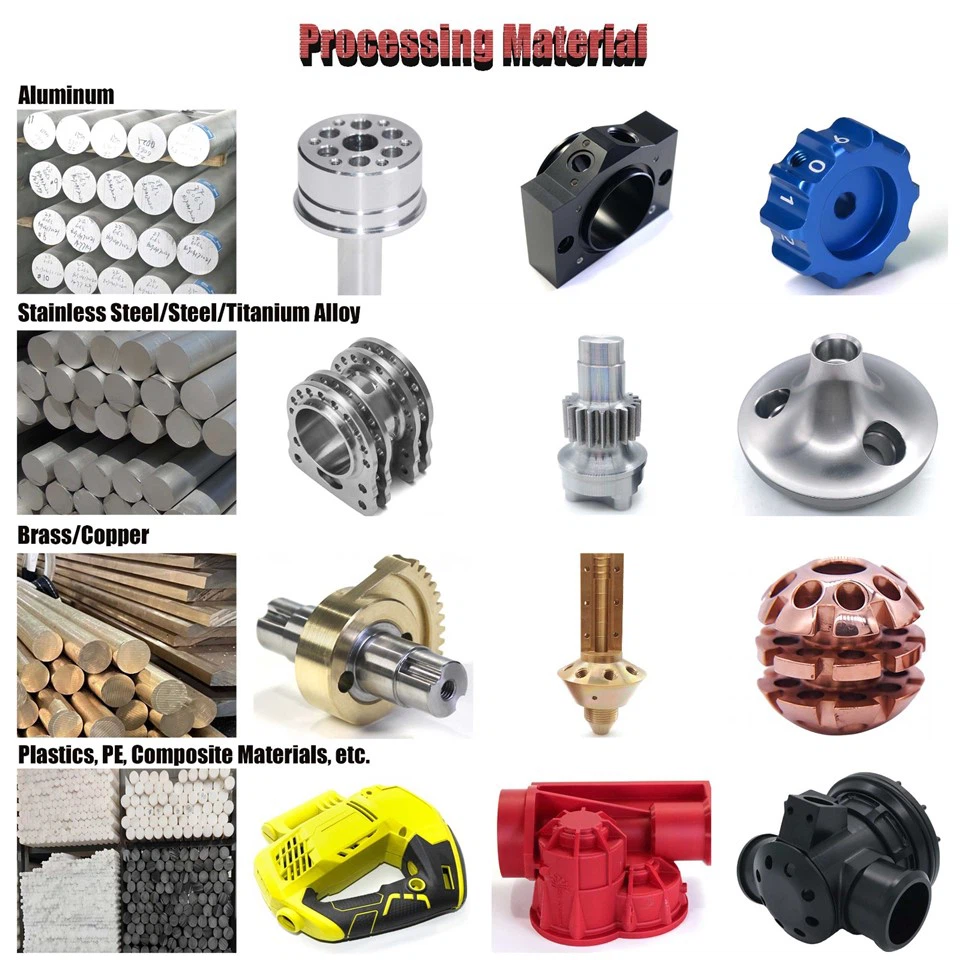
Processing Materials: aluminum, brass, copper, steel, stainless steel, iron, plastic, and composite materials etc.
Send Inquiry
Product Details ofMainstream Precision CNC Machining
If you've ever held a perfectly machined part-maybe a custom bike component, a piece of a high-end speaker, or even a part from your car-you've seen the result of precision CNC machining. It's one of those technologies that's everywhere once you start looking for it.
It All Starts with a Digital Handshake
Before any metal is cut, the most crucial conversation happens: the one between the designer and the machinist.
A good manufacturing partner will look at that file and ask:
- "Can we actually machine that super-tight internal corner?"
- "Would changing this material save cost without sacrificing strength?"
- "Is this design optimized to be held securely in the machine?"
This collaboration is the first step to precision. It's about turning a great design into a manufacturable one.
The "Magic" is in the Programming (Not Just the Machine)
Okay, so we have a finalized design. Now what? This is where the "CNC" (Computer Numerical Control) part shines.
This program tells the machine everything:
- What tool to use: A tiny end-mill for fine details? A large drill for a big hole?
- Where to move: The exact path the tool must take in three-dimensional space.
- How fast to spin and feed: The RPMs and the rate of movement.
The precision comes from this meticulous programming. It's not just about telling the machine what to do, but how to do it in the most efficient and accurate way possible.
More Than Just Metal: A World of Materials
A huge advantage of mainstream CNC machining is its incredible material flexibility. It's not just for steel and aluminum anymore.
- Plastics: From durable Delrin® (POM) for low-friction parts to peek for high-temperature applications.
- Exotic Metals: Titanium for aerospace, brass for beautiful decorative pieces, and copper for heat dissipation.
- Composites: Machining specialized materials used in everything from medical devices to electronics.
The ability to work with such a wide range of materials is what makes CNC so versatile. The same machine that makes a surgical stainless steel implant one day can be making a prototype from engineering-grade plastic the next.
Why "Precision" is a Process, Not a Promise
You'll see shops touting tolerances like ±0.001 inches (about the width of a human hair). But hitting that tolerance consistently on 1 part or 10,000 parts is the real challenge.
True precision manufacturing is built on a foundation of:
- Rigid, Well-Maintained Machines: A wobbly machine can't make a precise part.
- In-Process Inspection: Using tools like digital calipers, micrometers, and CMMs (Coordinate Measuring Machines) to check parts during production, not just after.
- Quality Control Culture: A mindset where every team member is empowered to ensure quality.
It's this end-to-end system that separates a hobbyist machine from a professional manufacturing partner.

Wrapping It Up: The Unsung Hero of Innovation
In the end, mainstream precision CNC machining is the quiet, reliable engine of innovation. It's the technology that allows engineers, designers, and entrepreneurs to turn their ideas into tangible, high-quality reality.
It's a field driven as much by smart software and skilled people as it is by powerful hardware. So next time you see a beautifully made product, you'll know there's a good chance a CNC machine-and a clever machinist-helped bring it to life.
Looking to bring your own design to life? Understanding the process is the first step. Feel free to explore our other resources or reach out for a quote on your next project.
FAQ
Q:How fast can I receive a CNC prototype?
A:Lead times vary depending on part complexity, material availability, and finishing requirements, but generally:
- Simple prototypes: 1–3 business days
- Complex or multi-part projects: 5–10 business days
Expedited service is often available.
Q:What design files do I need to provide?
A:To get started, you should submit:
- 3D CAD files (preferably in STEP, IGES, or STL format)
- 2D drawings (PDF or DWG) if specific tolerances, threads, or surface finishes are required
Q:Can you handle tight tolerances?
A:Yes. CNC machining is ideal for achieving tight tolerances, typically within:
- ±0.005" (±0.127 mm) standard
- Tighter tolerances available upon request (e.g., ±0.001" or better)
Q:Is CNC prototyping suitable for functional testing?
A:Yes. CNC prototypes are made from real engineering-grade materials, making them ideal for functional testing, fit checks, and mechanical evaluations.
Q:Do you offer low-volume production in addition to prototypes?
A:Yes. Many CNC services provide bridge production or low-volume manufacturing, ideal for quantities from 1 to several hundred units.
Q:Is my design confidential?
A:Yes. Reputable CNC prototype services always sign Non-Disclosure Agreements (NDAs) and treat your files and intellectual property with full confidentiality.
Hot Tags: mainstream precision cnc machining, China mainstream precision cnc machining manufacturers, suppliers, factory, custom sheet metal stamping, cnc vtl, aluminium rim brake wheelset, aluminum seat post, 9 axis cnc, parts of medical hammer
Send Inquiry
