

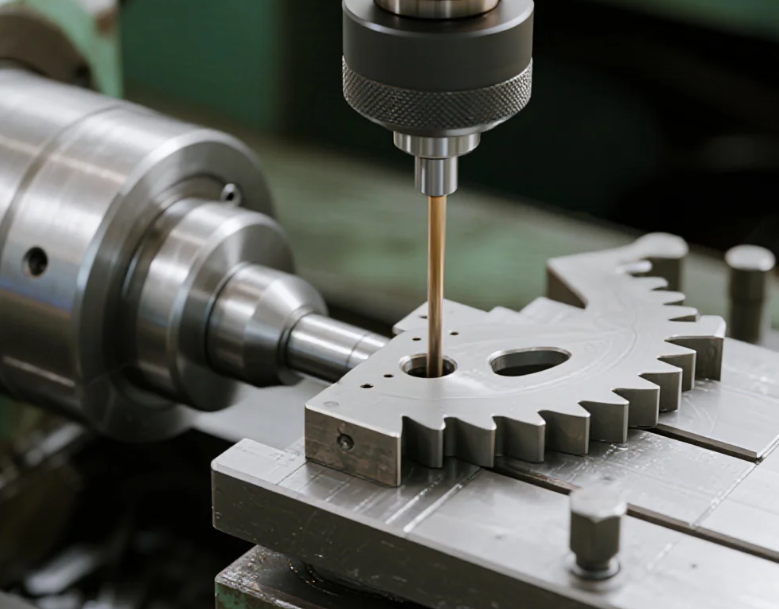
CNC Turning Milling Drilling Grinding
Machinery Axis: 3,4,5,6
Tolerance:+/- 0.01mm
Special Areas : +/-0.005mm
Surface Roughness: Ra 0.1~3.2
Supply Ability:500000Piece/Month
1-Piece Minimum Order
3-Hour Quotation
Samples: 1-3 Days
Lead time: 7-14 Days
Certificate:Medical,Aviation,Automobile,
ISO9001:2015,AS9100D,ISO13485:2016,ISO45001:2018,IATF16949:2016,ISO14001:2015,RoSH,CE etc.
Processing Materials: aluminum, brass, copper, steel, stainless steel, iron, plastic, and composite materials etc.
Send Inquiry
Product Details ofCNC Turning Milling Drilling Grinding
You open the shop door: the steady hum of a lathe, the clack of a milling cutter, the metallic smell of coolant, and a freshly ground part catching the overhead light. A procurement manager hands you a drawing with tight fits, a stack of prototypes, and a deadline - which process should you pick to meet tolerance, cost, and lead time? This guide helps you make that decision and turn the result into a high-performing Google page that ranks.
Quick summary: when to use each process
Turning: best for cylindrical parts, shafts, bushings; fast single-op cycles. Typical tolerances: ±0.02–0.005 mm (depending on finish/fixture).
Milling: best for complex flats, slots, pockets, 3D contours; flexible for prototypes and low–medium volumes. Typical tolerances: ±0.05–0.01 mm.
Drilling: holes and basic bores; use reaming or boring for precision holes. Typical hole tolerance: H7 / ±0.01–0.02 mm after reaming.
Grinding: final-size accuracy and fine surface finish (mirror finishes, ∼Ra 0.1–0.4 μm); used for hardened materials and shrink-fit shafts.
(Use the process or combination - e.g., turn→mill→grind - depending on geometry and required finish.)
H2 - Process selection checklist
Geometry: cylindrical → turning; prismatic/complex surfaces → milling.
Material hardness >40 HRC → consider grinding or hard milling.
Hole accuracy >0.01 mm → drill → ream/boring → hone/finish.
Volume: prototyping → flexible milling/turn-mill; high volume → dedicated turning or multi-op machining.
Surface finish: Ra < 0.4 μm → grinding or superfinishing.
H2 - Cost drivers & quoting points
Break down the quote into:
Setup time (CAM, fixturing) - dominates low-volume quotes.
Cycle time - toolpath strategy, feeds/speeds, and automation.
Material cost - exotic alloys raise machining time and tool wear.
Secondary ops - heat treatment, grinding, coating, inspection.
Tolerance & inspection - CMM time, SPC adds cost.
Practical tip: show a sample quote table on your page (itemized) to satisfy "Buy" intent: tooling, raw material, process time, secondary ops, lead time, MOQ.
H2 - Example (illustrative) case study - prototype → production
Illustrative results (example only):
Problem: 100 mm shaft, Ø tolerance ±0.01 mm, Ra 0.8 μm, 500 pcs/month.
Solution: rough turning + finish grinding.
Outcome: cycle time per piece 90s turning + 45s grinding; scrap rate reduced from 4% to 0.6% after process optimization; unit cost dropped 18% when switching to CNC turn-grind cell for production.
Label this block as an illustrative example so readers understand the numbers are representative industry outcomes, not a claim of personal testing.
Hot Tags: cnc turning milling drilling grinding, China cnc turning milling drilling grinding manufacturers, suppliers, factory, aluminium aero handlebars, aluminum mountain bike rims, cnc winding, stamping auto parts, stamping die parts, steel cable parts
Send Inquiry
